Before we design anything, we need to understand everything.
Most agencies start with moodboards. We start with your market, your customers, your competitors, and what makes you genuinely different. The design comes after. That’s why it lasts.

Forgettable isn’t dramatic. It doesn’t announce itself. It just quietly costs you clients, contracts, and credibility you never knew you were losing.
The right brand doesn’t just look better. It opens doors that were quietly closed before.
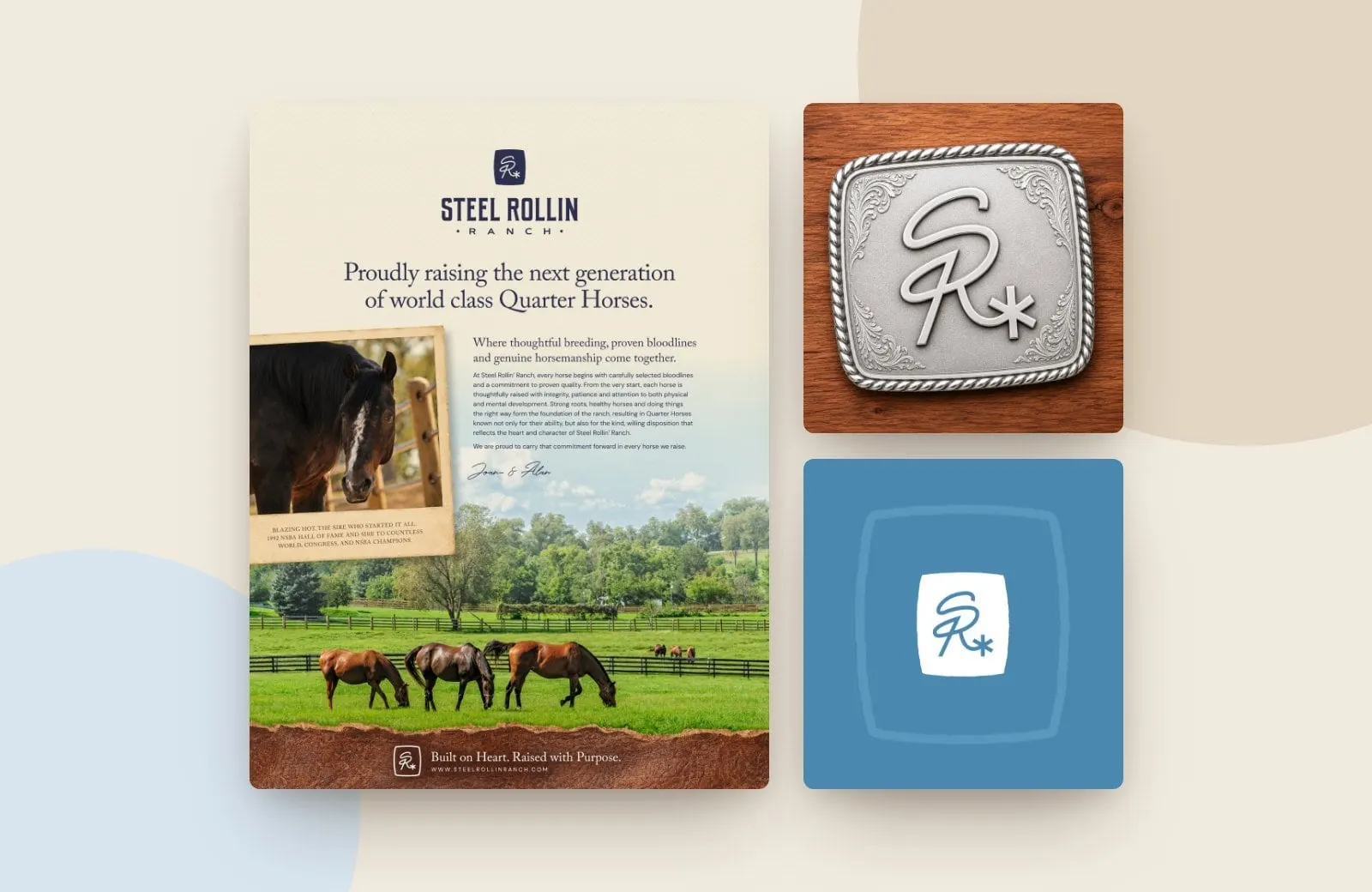
A brand is not a logo. It’s not a colour palette or a font choice. It’s the whole impression your business makes before anyone has read a word, heard your pitch, or seen your product. Building that impression intentionally — rather than letting it form by accident — is what branding actually is. And doing it well requires more strategy than most people expect.
We work through discovery first. That means competitive research, audience personas, positioning, messaging, and brand voice — all before a single concept is sketched. When the creative work begins, it’s grounded in something real. Not instinct. Not aesthetics. Your business.
And if you don’t have the right name yet — we do that too.
A better brand starts with one conversation.
Here’s what a branding project with Envy actually includes.
From blank page to brand you’re proud of — here’s how we get there.
Every branding project follows the same process — because the thinking matters as much as the design. From the first conversation to the final file delivery, here’s what working with Envy on your brand actually looks like.
-
01Discover
Brand Questionnaire & Discovery
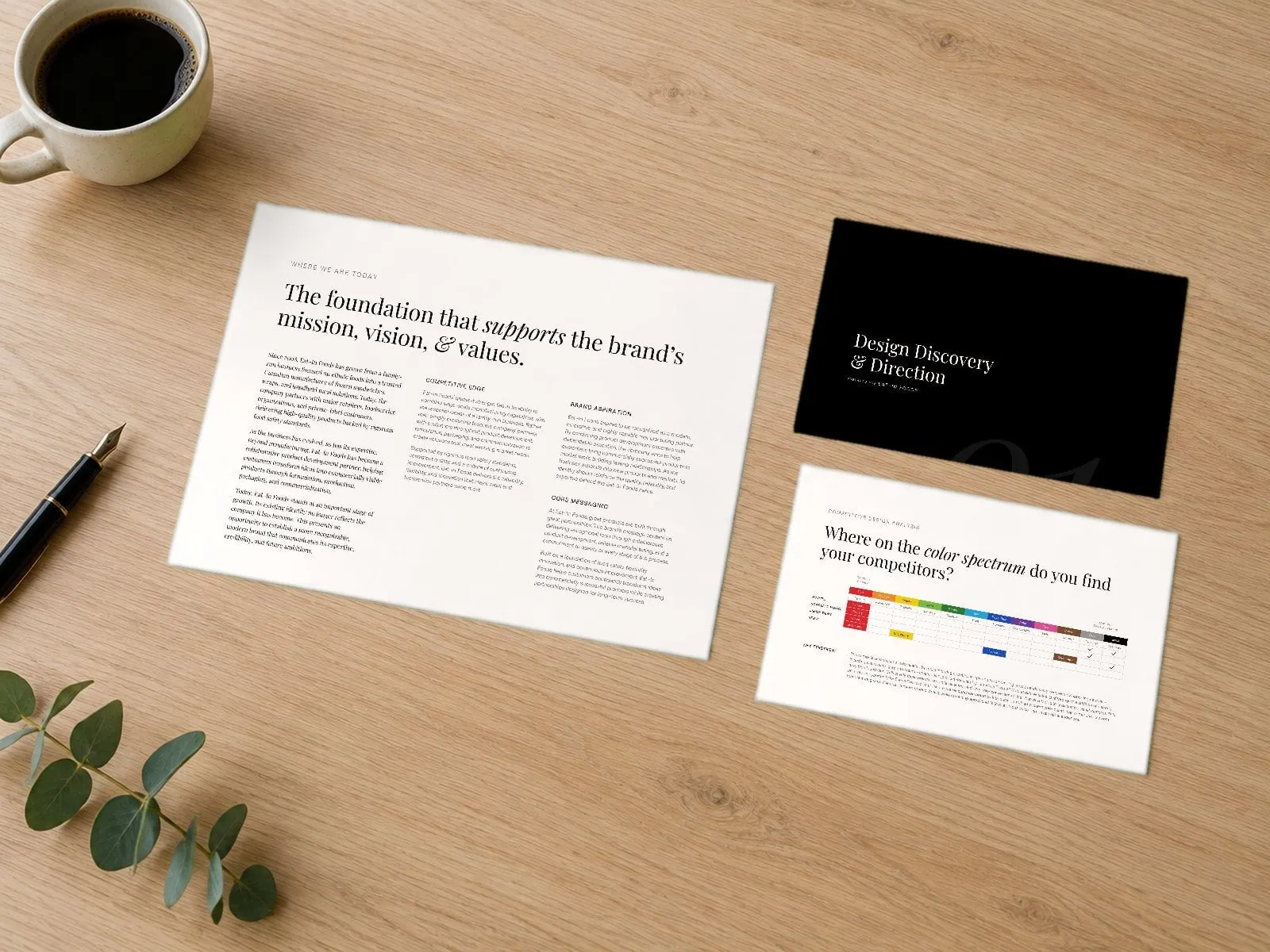
We start by learning your business inside out: your story, your goals, your customers and what makes you genuinely different. A detailed brand questionnaire and honest conversations with your team draw out the things that are obvious to you but invisible to everyone else.
Everything that follows is built on this. Many clients find they see their own business a little more clearly by the end, and we come away with the raw material for research, positioning and, eventually, a brand identity that fits.
-
02Discover
Competitive & Industry Research
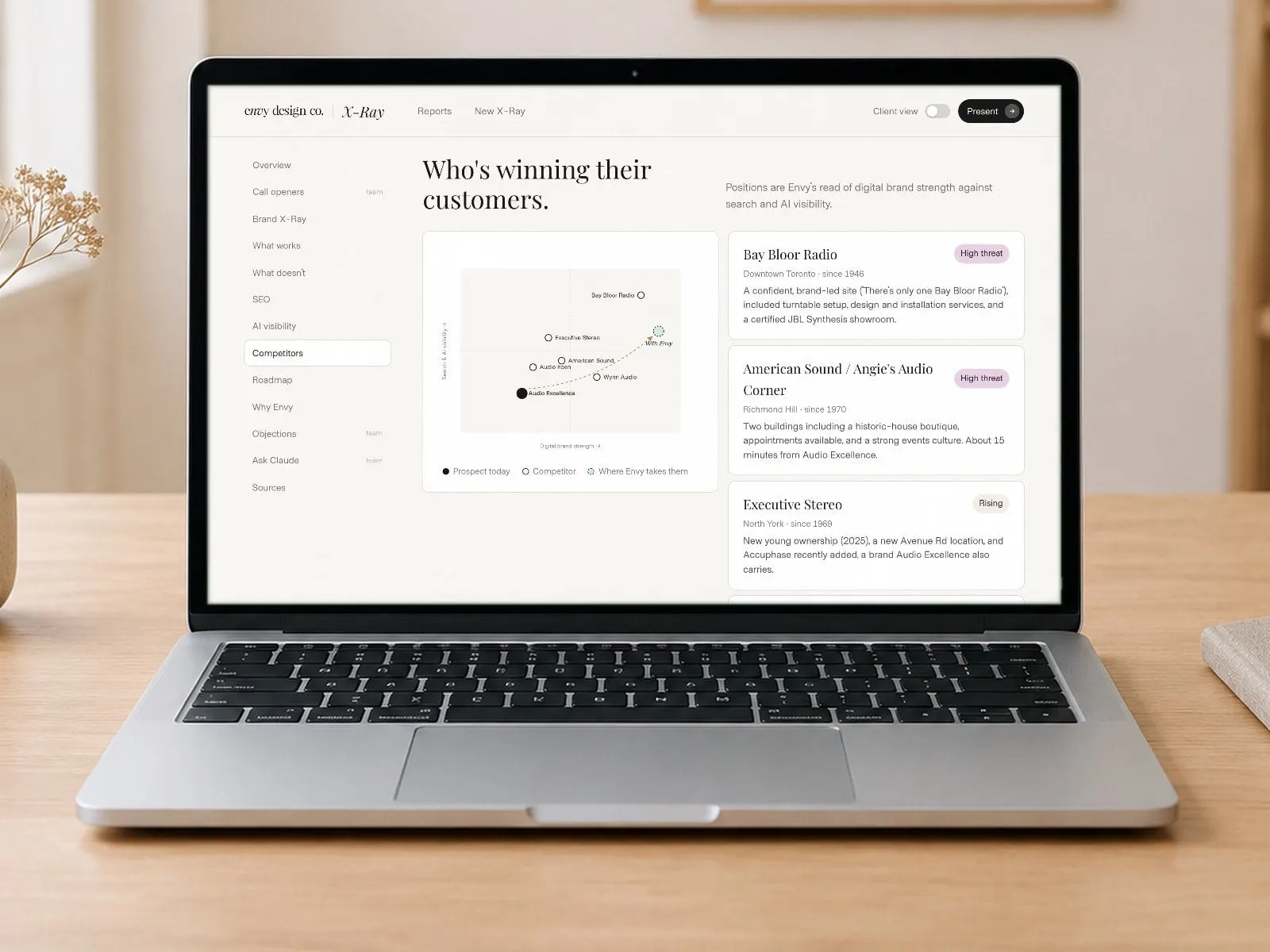
We study your market. Who your competitors are, how they show up, where they’re strong, and where the gaps are. We look at their branding, messaging and visual style to understand what customers in your industry are used to seeing.
We’re looking for the space your brand can own, not by being louder than everyone else, but by being more distinctly and authentically you. Those findings set up the next question: who exactly are we trying to reach?
-
03Define
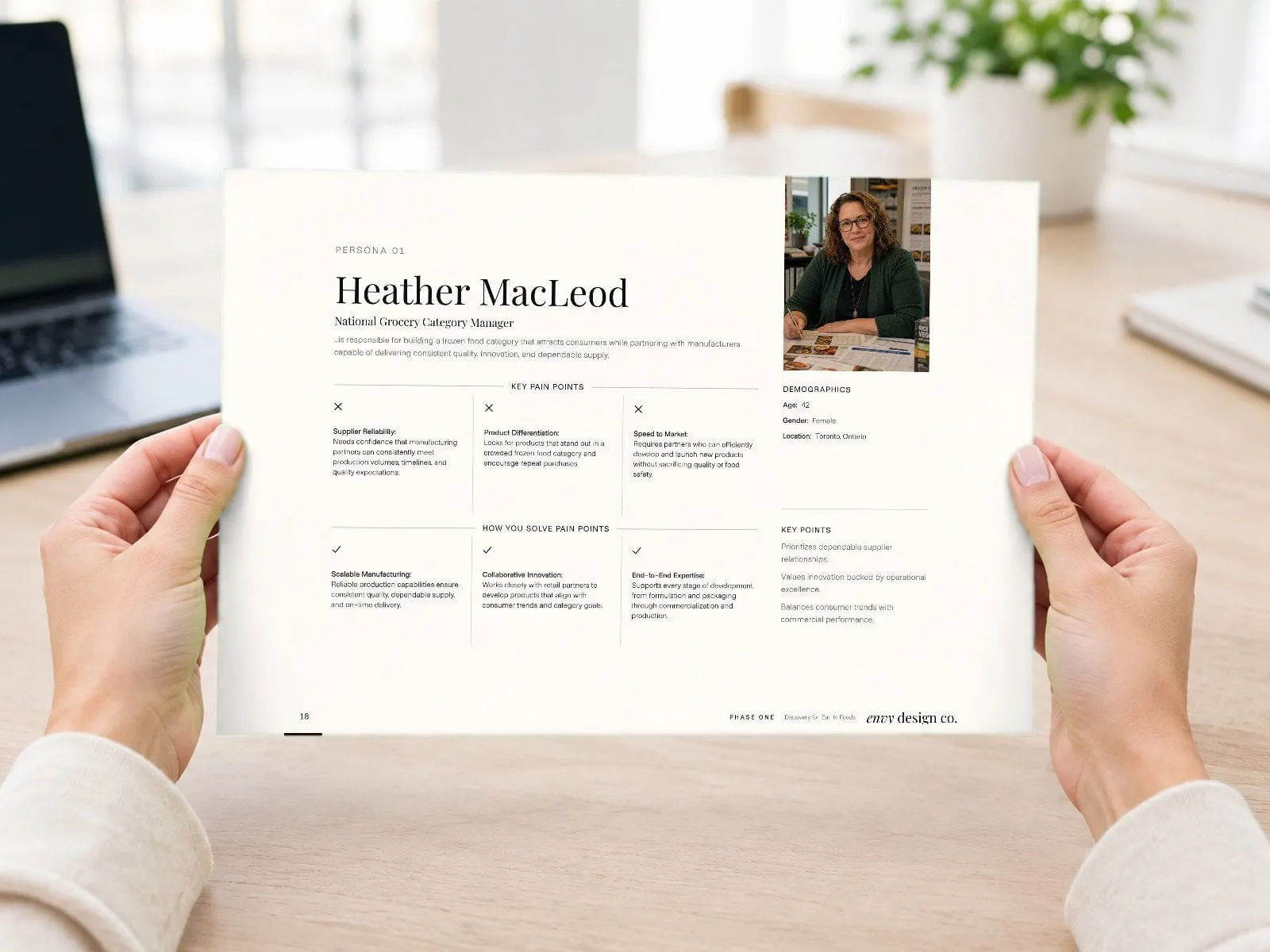
Audience Personas
We define who you’re actually talking to: their motivations, their expectations and what makes them choose one brand over another. Personas turn a fuzzy target market into real people with real reasons to buy.
They keep every creative decision honest. When we’re weighing a typeface or a tagline, we’re asking whether it speaks to these people, not just whether it looks nice. With your audience clear, we can shape positioning and messaging that will resonate with them.
-
04Define
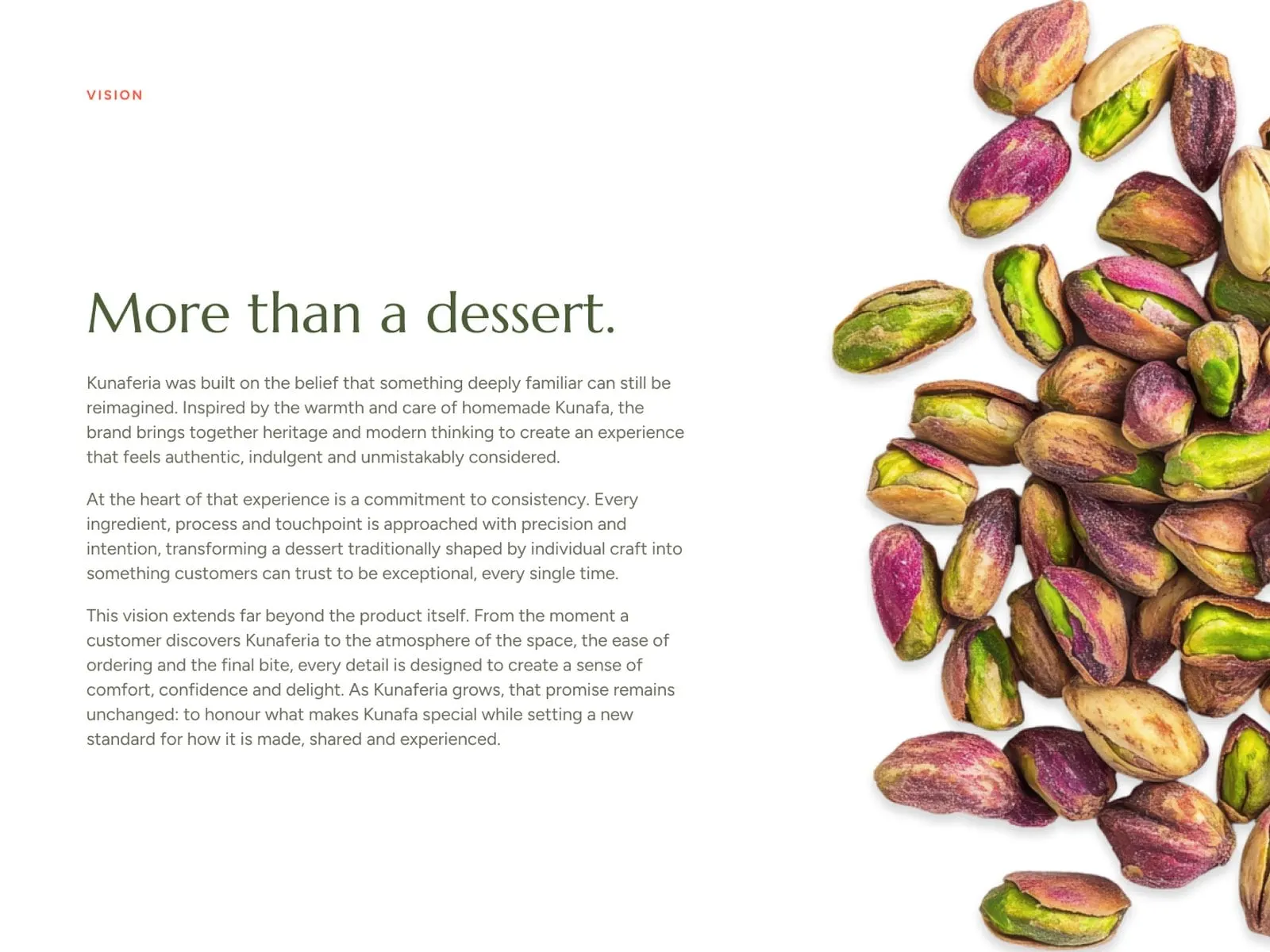
Positioning & Messaging
We work out what you stand for, how you’re different and how to say it clearly, plus the voice and tone to say it in. This is brand strategy in plain language: a positioning statement, key messages and a voice your whole team can use.
It’s the bridge between research and design. Once everyone agrees on what the brand needs to communicate, the creative work has a real brief, and the concepts that come next have a reason behind every choice.
-
05Create
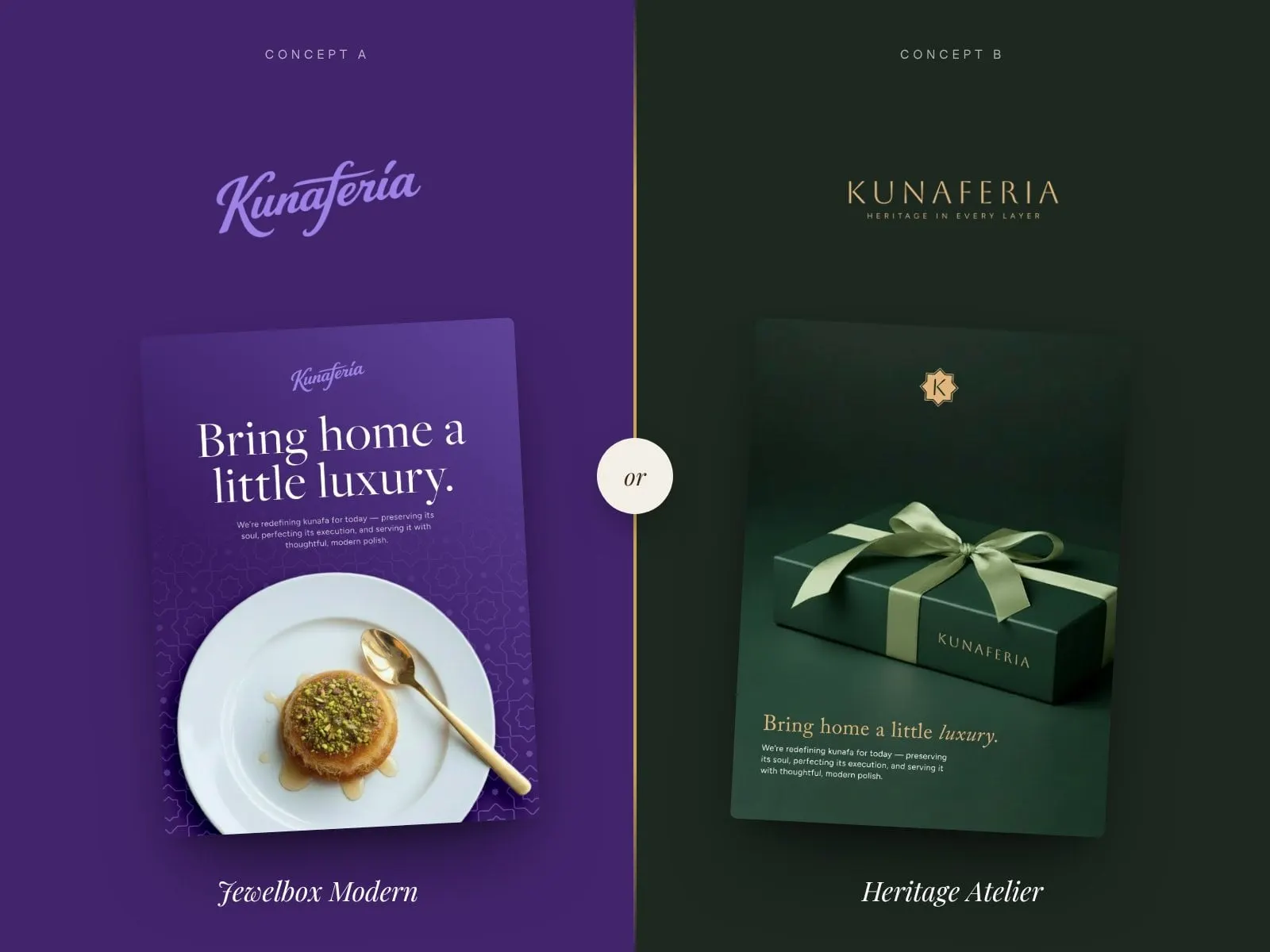
Two Concept Directions
We present two genuinely distinct creative directions, with the strategic rationale behind every decision. Not one idea in two colourways, but two different answers to the same brief, each showing how your logo, colours and type could come together.
Because each concept ties back to the strategy, the conversation is about what fits your business rather than personal taste alone. You choose the direction that feels right, and we take it into refinement.
-
06Refine
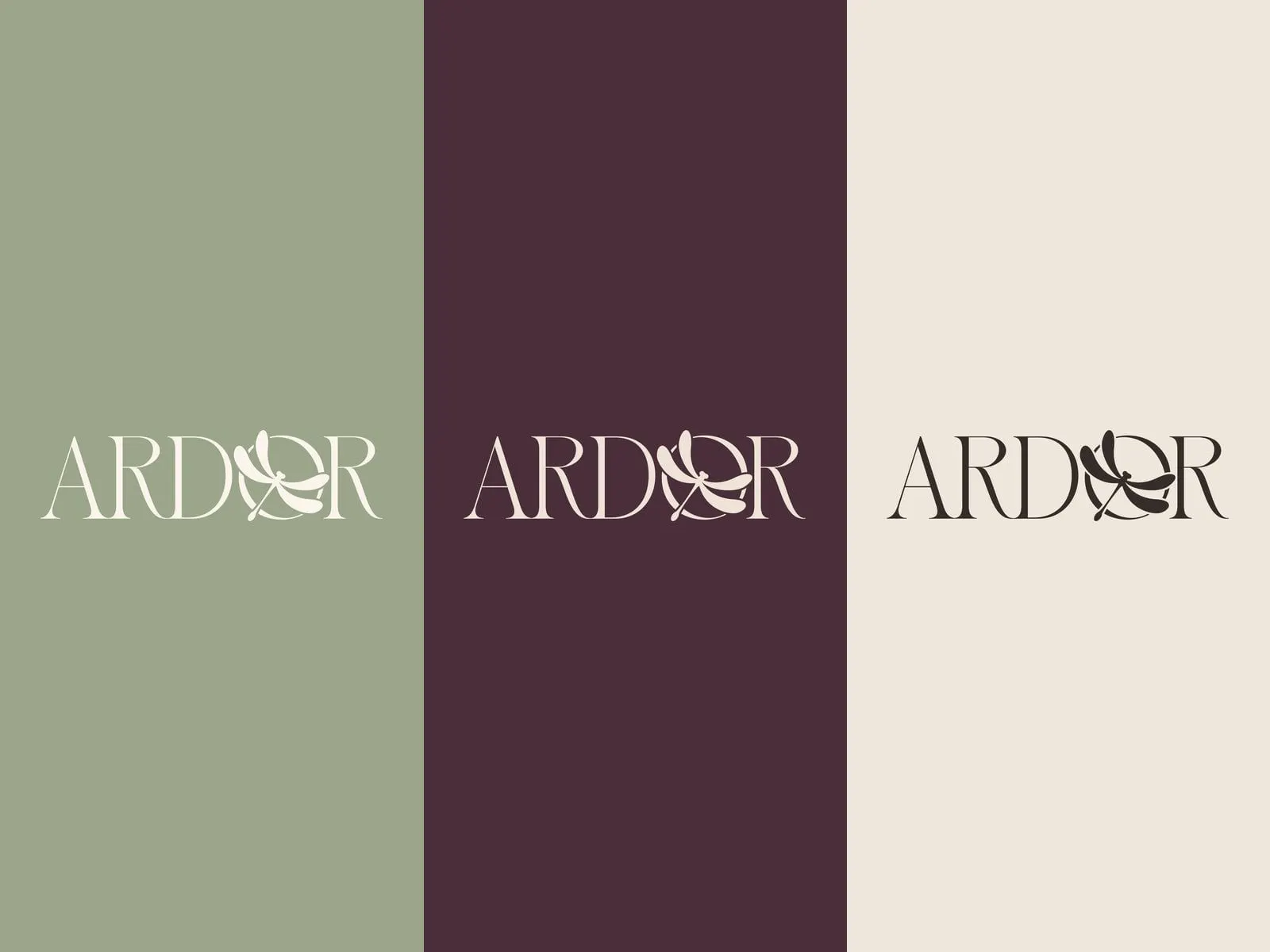
Refinement
We develop the chosen direction into a complete identity: logo system, colour, typography and imagery. A logo system means more than a single logo, with versions that work everywhere from a wide website header to a tiny social media icon.
Your feedback shapes the details, and we refine until every piece works together. The result is a flexible visual identity that holds up wherever it appears, which is exactly what we put to the test next in real-world mockups.
-
07Apply
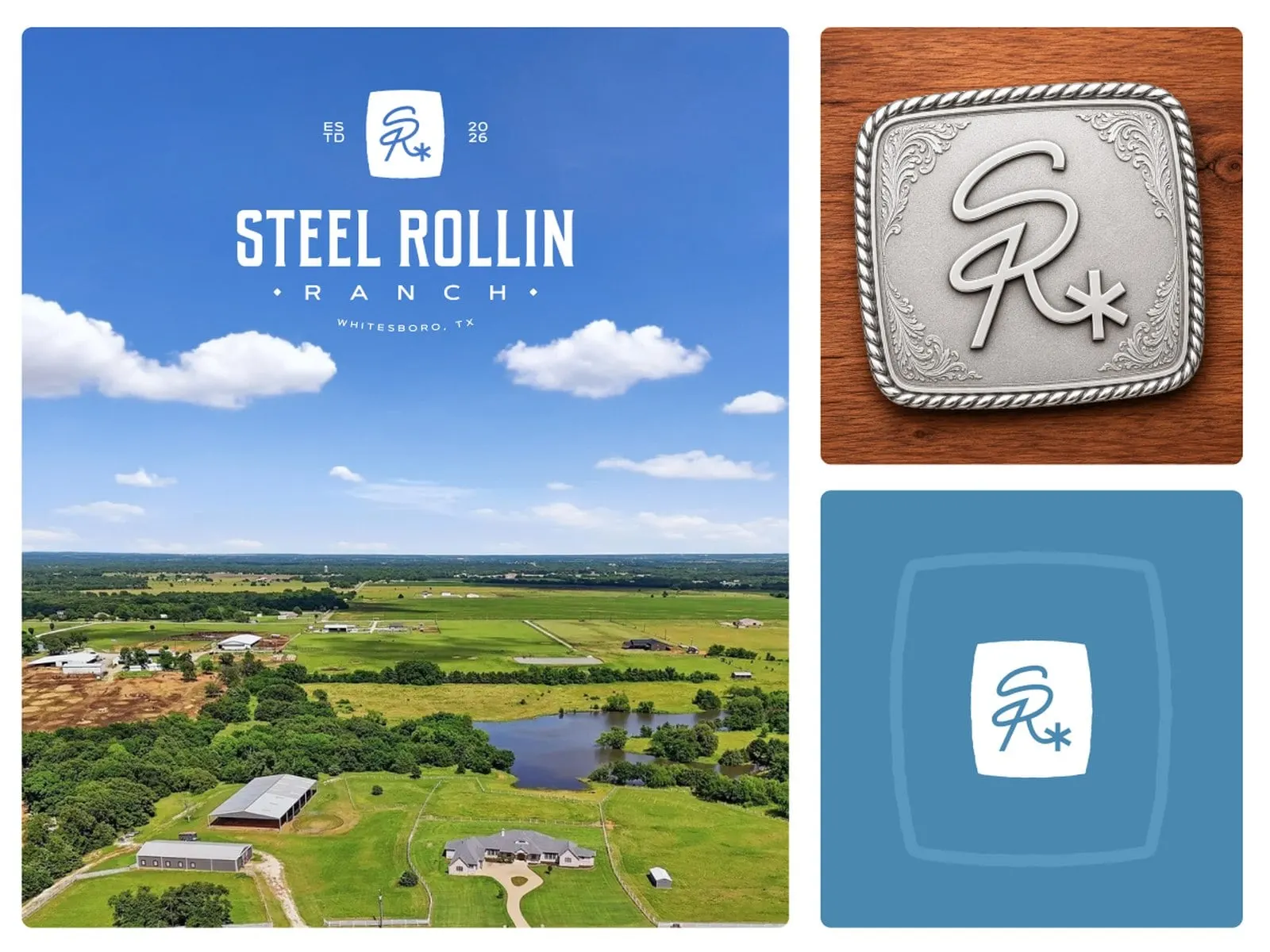
Application Mockups
Your brand shown in context (business cards, signage, digital, packaging) so you can see exactly how it lives in the real world. A logo floating on a white screen only tells part of the story.
Seeing the identity applied helps you make final calls with confidence and catch anything that needs adjusting before the files are finalized. It also shows off how flexible the system is, and it sets up the last step: handing everything over.
-
08Deliver
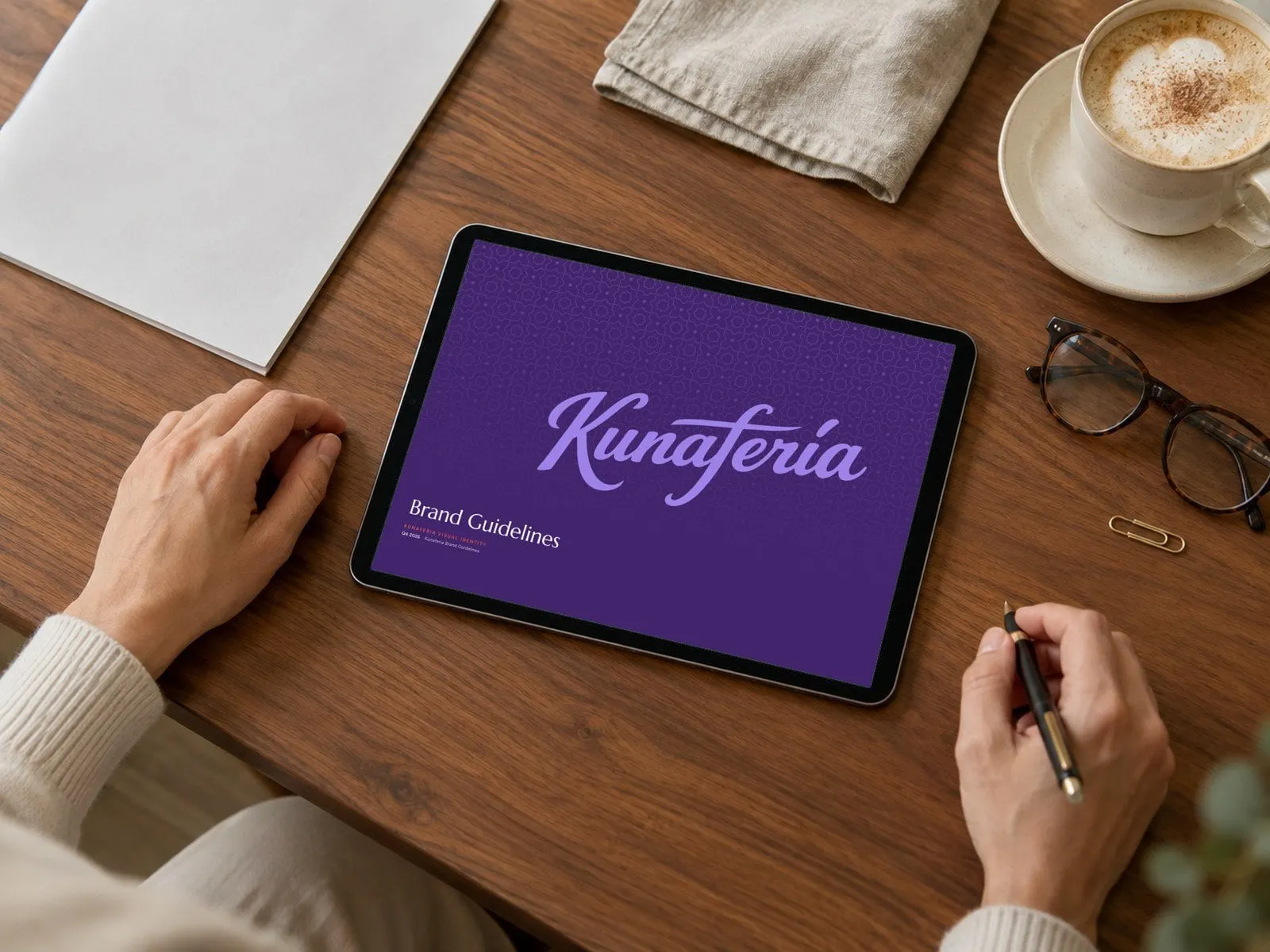
Final Files & Guidelines
Every file you need, organized and ready to use: logo files for print and digital, colour values, fonts and supporting brand assets. No more hunting for the right version or emailing a designer for a PNG.
You also get brand guidelines that keep your brand consistent as you grow. When new staff, printers or agencies come on board, everyone works from the same rules, so the identity we built together stays sharp for years to come.

in secured funding for Diverge Health. We built Diverge Health’s brand from the ground up — identity, positioning, and visual system. The result was a brand that elevated their value proposition and gave investors the confidence to back them.

in secured funding for Guidelight Health. Another brand built from scratch. A cohesive visual identity and strategic messaging that resonated with stakeholders and helped Guidelight communicate their vision with clarity and conviction.
Design that moved the needle.
Good branding opens doors. Here’s proof.
When design is done right, it moves the needle. It communicates value, inspires trust, and opens doors to transformative opportunities.
Don’t take our word for it.
They took the extra time to ensure every detail of our site felt aligned, elevated, and engaging.
Alexis CiancioCo-Founder & Director, ClubWell Inc.
Beyond their technical expertise, what truly stood out was how personally invested the team was in our success. They took the time to understand our business priorities and consistently aligned their work to meet those objectives.

Their communication, attention to detail, and commitment to measurable outcomes made them feel like genuine partners rather than just a vendor. They are terrific.

They took the time to truly understand our brand and vision, and translated that into a website that is both visually appealing and highly functional.

Ready to build something worth envying?
Tell us a bit about your goals and we’ll be in touch as soon as we’re able to explore how we can help bring your vision to life.
Frequently asked questions.
How much does branding cost?
Branding projects at Envy start at $7,500 and scale based on scope, deliverables, and complexity. Every project is quoted individually; we don't have packages because no two businesses are the same.
What affects the cost of branding? Mostly how much ground we need to cover. A logo and visual identity for a new business is a different project from a full rebrand with brand strategy, messaging, naming, brand guidelines and rollout across signage, packaging or a website. The number of applications you need designed also matters. Fill out our project form for a clear, itemized quote, so you can see exactly what's included and decide what fits your budget and goals right now.
How long does a branding project take?
Typically 6–10 weeks from discovery to final files, depending on scope and feedback rounds. Larger projects with naming, extensive messaging or many applications can take longer.
A branding project usually moves through discovery and strategy, creative exploration, refinement and final delivery. Discovery is where we learn about your business, customers and competitors, and it's the foundation for every design decision that follows. Feedback rounds are where timelines tend to stretch, especially when several people need to agree, so we agree on decision-makers early. If you're working toward a launch, event or website project, tell us and we'll build the schedule around that date.
What’s the difference between a rebrand and a brand refresh?
A refresh updates how your brand looks while keeping its foundation; a rebrand revisits the foundation itself: positioning, name, messaging and identity.
A brand refresh might modernize your logo, adjust your colour palette, update typography and tidy up inconsistent materials, while keeping the recognition you've already built. It suits businesses whose strategy is still right but whose look has fallen behind. A rebrand goes deeper. It makes sense after a merger, a major change in services or audience, or when your current brand simply doesn't reflect what the business has become. Both can be the right call. Our discovery process helps you figure out which one you actually need, rather than spending on more than necessary.
Do I need a full rebrand or just a logo update?
If your business has changed, with a new audience, new services or new ambitions, you likely need more than a logo. Discovery tells us which, and we'll be honest about it.
A logo update makes sense when your positioning and messaging still fit and the visual identity just looks dated or doesn't work well on screens. A full rebrand makes sense when the problem is deeper: customers misunderstand what you do, you're attracting the wrong clients, or you've outgrown your name or story. Sometimes the answer sits in between, like a refreshed logo plus clearer messaging. We'll look at your business, competitors and current materials before recommending anything, and we won't upsell a rebrand you don't need.
Who will I be working with?
Our senior designers and the founders, who stay involved from the first conversation to the final files.
As a founder-led branding agency, we don't pass your project to a junior team after the sales call. The people who learn about your business in discovery are the same people who develop your strategy, design your identity and prepare your final files. That continuity matters in branding, where small details and nuances about your business shape the work. You'll have direct access to the team, regular check-ins and honest feedback throughout. It's a more personal way to work, and it tends to produce brands that feel true to the business.
What do I actually receive at the end?
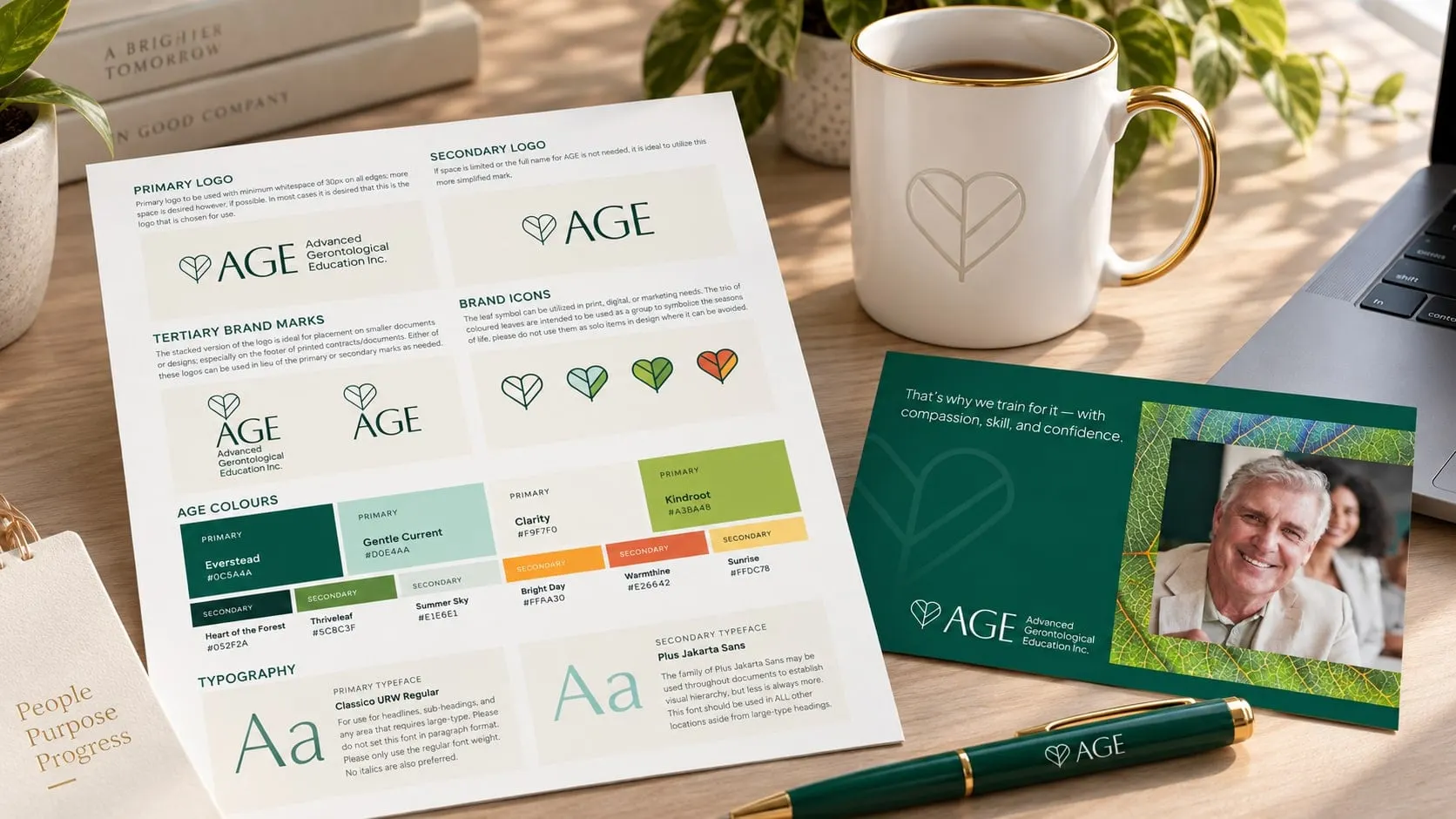
A complete logo system in every format, colour and typography systems, application mockups and, if included, brand guidelines that make it easy for anyone to use your brand well.
Your logo system typically includes primary and secondary versions, icons or marks, and colour, black and reversed variations, delivered in the file formats you'll need for print, web and signage. Colour and typography systems define exactly which colours and fonts to use and how. Application mockups show the brand in real situations, like business cards, a website, signage or packaging, so you can see how it works in practice. Everything is organized and labelled, so your team and any suppliers can find the right file quickly.
Do you offer brand guidelines?
Yes, as an add-on or part of a full identity project: a clear rulebook covering logo use, colour, type, imagery and voice.
Brand guidelines are what keep your brand consistent once it leaves our hands. They help your team, printers, web developers and other agencies use your brand correctly, whether they're designing a trade show booth or a social post. Good guidelines are practical, not just pretty, with clear examples of what to do and what to avoid. We tailor the depth to your business, from a concise guide for a small team to a more detailed system for a larger organization. We can also create guidelines for an existing brand.
What is brand identity design?
The visual and verbal system that expresses who you are: logo, colour, typography, imagery, voice, and the rules that keep them consistent.
Brand identity design is more than a logo. It's the complete toolkit that makes your business recognizable across every touchpoint, including your website, signage, packaging, presentations and social media. A strong identity starts with strategy: who you serve, what makes you different and how you want people to feel. The design then expresses that through visual choices and a consistent tone of voice. When everything works together, customers recognize you faster and trust you sooner, and your team spends less time reinventing materials for every new project.
What makes a strong brand identity?
Clarity, distinctiveness and consistency. It should be grounded in strategy, easy to recognize, and flexible enough to work everywhere you show up.
Clarity means people quickly understand who you are and what you offer. Distinctiveness means you don't blend in with competitors; if your logo and colours could belong to anyone in your industry, they're not working hard enough. Consistency means your brand looks and sounds the same across your website, signage, social media and sales materials. Flexibility matters too, because a strong brand identity needs to work at tiny sizes and huge ones, in print and on screen. Get those right and your brand builds recognition every time someone sees it.
How do I know if my brand needs a refresh?
If you're embarrassed to hand over a business card, your materials all look different, or you're winning work despite your brand rather than because of it, it's time.
Other signs include a logo that doesn't work well on screens or social media, a brand that no longer reflects your services or customers, competitors who suddenly look more established than you, or a team that keeps improvising its own versions of your materials. A brand refresh can fix many of these issues without starting over, by updating your visual identity while keeping the recognition you've built. We're happy to look at your current brand and give you an honest view of what it needs.
What should I look for in a branding agency in Toronto?
A strategy-led process, work that varies by client (not one house style), and people who ask hard questions about your business.
When comparing branding agencies in Toronto, look at whether their portfolio shows real range. If every brand looks similar, you may get their style rather than yours. Ask how they approach discovery and strategy, who will actually work on your project and what you'll receive at the end. Check whether they can carry your brand into websites, packaging, signage or print, so you're not starting over with a new supplier. And pay attention to the first conversation: a good agency spends more time asking about your business than talking about itself.
How does branding affect business growth?
A clear, credible brand shortens sales cycles, supports higher prices and builds trust before the first conversation, as Diverge Health and Guidelight Health found when raising funding.
Branding affects how people perceive you before they ever speak to you. When your brand looks professional and communicates clearly, prospects arrive with more confidence, which can make sales conversations easier. A strong brand also makes your marketing work harder, because people recognize you across channels and remember you later. It helps with hiring, partnerships and investment too. Branding isn't a magic switch, and results depend on your business as a whole, but a brand that matches the quality of your work removes a lot of unnecessary friction.
What is the difference between branding and marketing?
Branding is who you are and how you're perceived; marketing is how you get that message in front of people. Great marketing on a weak brand works much harder for less.
Your brand includes your positioning, personality, visual identity and voice. It shapes what people think and feel about your business. Marketing is the set of activities that spread that message, like advertising, social media, email, SEO and events. The two depend on each other: a strong brand makes every marketing dollar more memorable, while marketing gives your brand reach. That's why we often recommend getting branding right before investing heavily in campaigns, so your marketing builds recognition instead of confusion.
Resources & articles
View all articles