E-Commerce Websites
Online stores that make people want to buy.
We design and build e-commerce websites that put your product first, make checkout effortless and give your team a store that’s easy to run.

People don’t abandon carts because they changed their mind. They leave because the site made it harder than it needed to be. Every e-commerce site we build is designed around one thing: getting the right product into the right hands with as little friction as possible.
What makes a good e-commerce website?
Your best salesperson, open 24/7.
A good e-commerce website does three jobs at once: it makes the product look irresistible, it makes finding and buying easy, and it gives your team simple tools to manage orders, stock and promotions. When any one of those slips, sales slip with it.
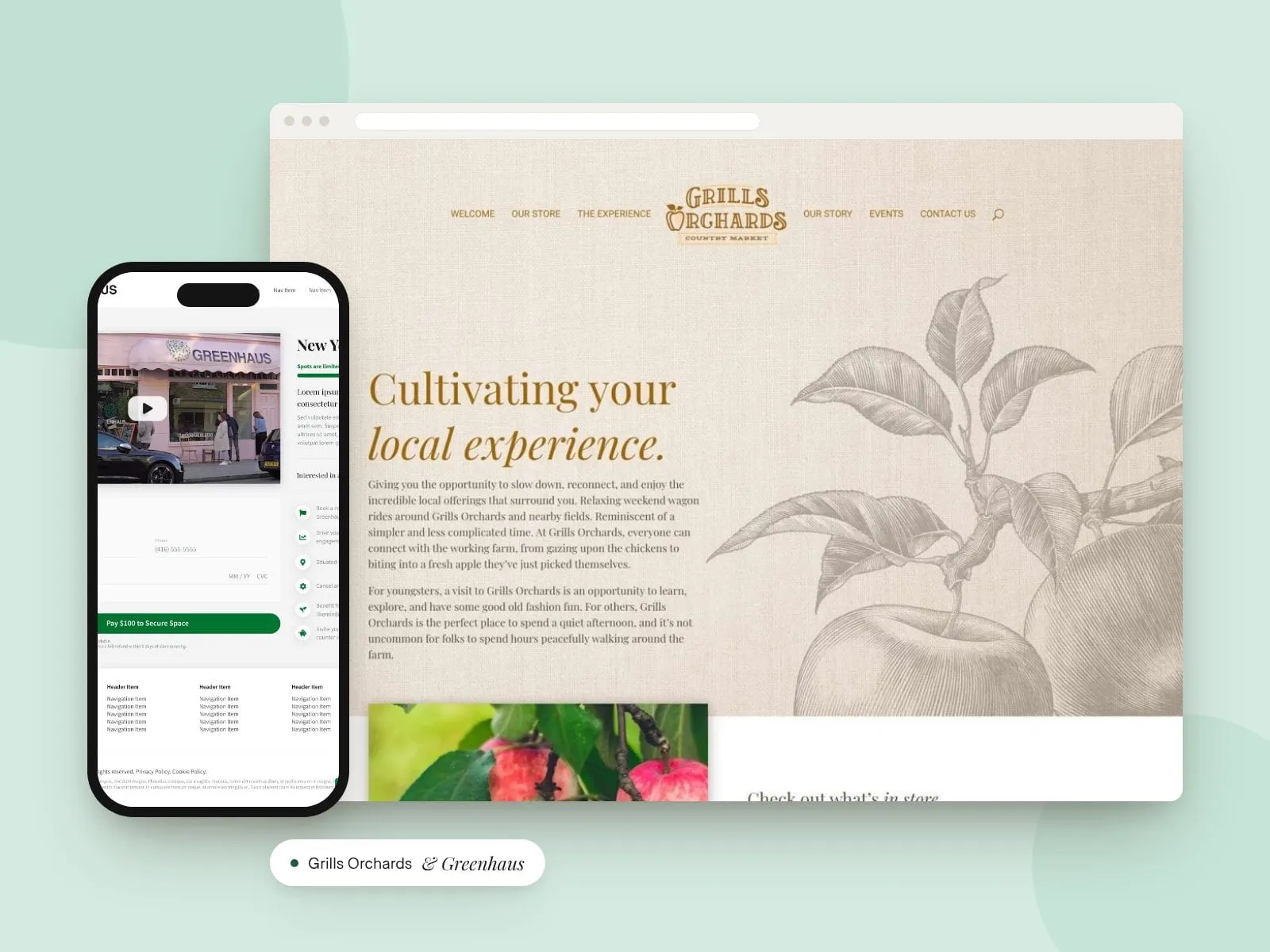
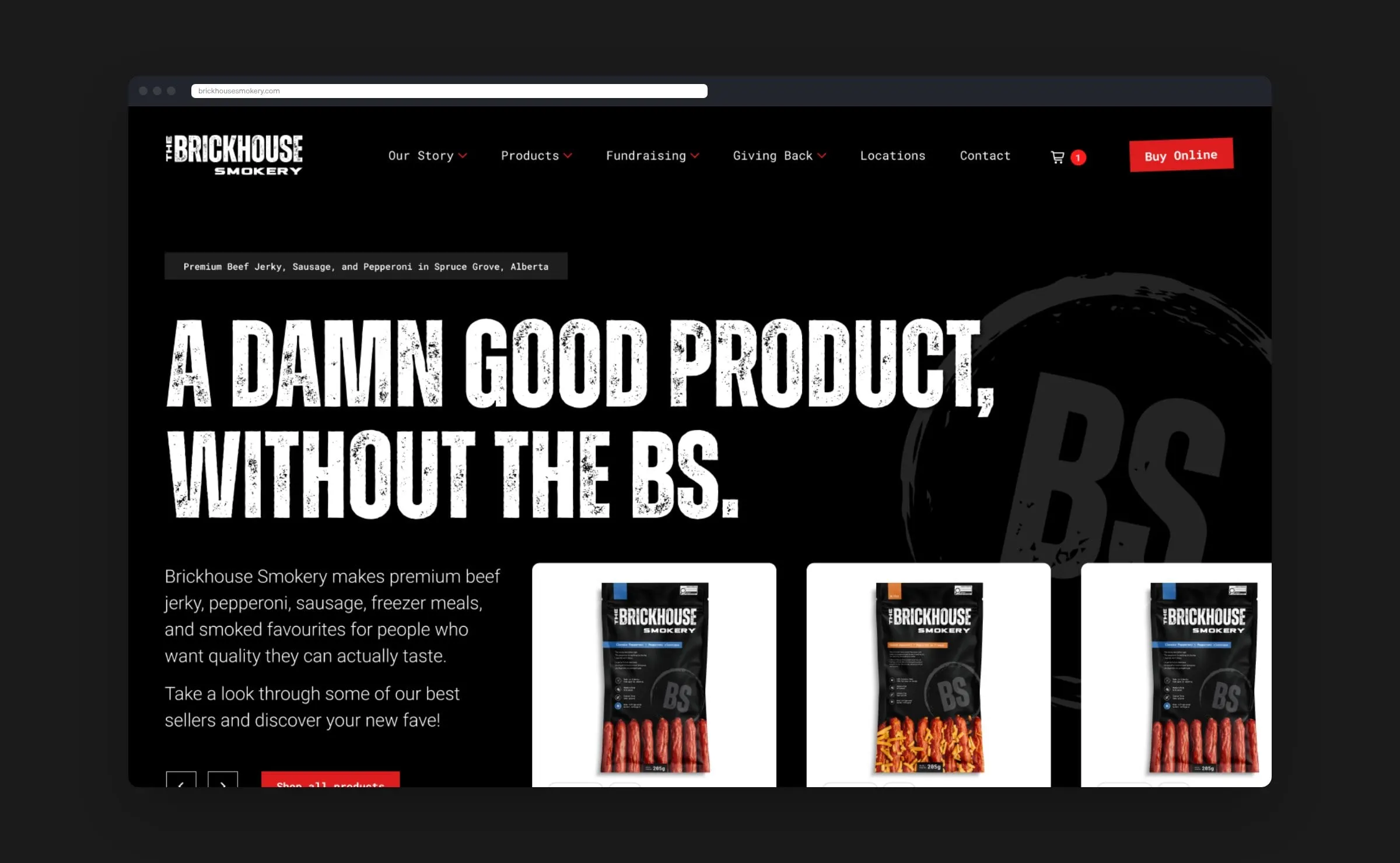
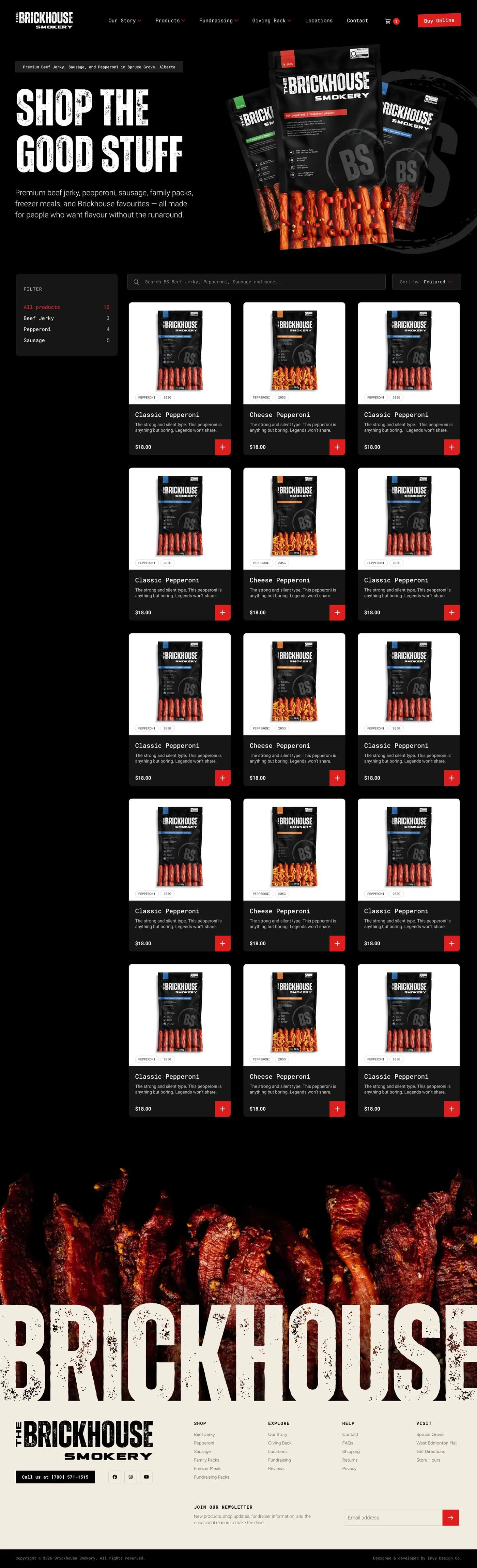
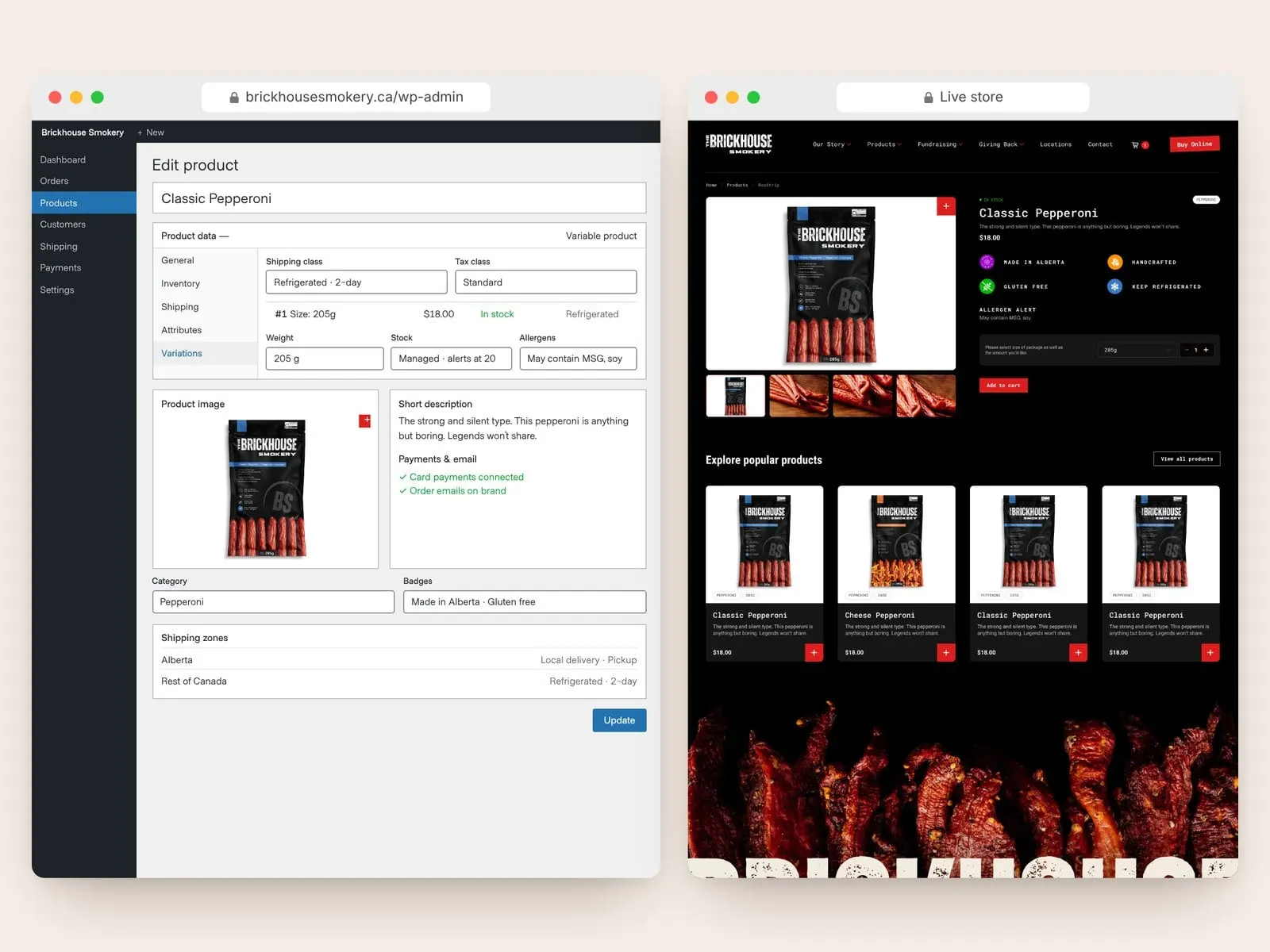
For The Brickhouse Smokery we built an online shop that matches their bold packaging, with product pages that show allergen information at a glance and a fundraising program that runs right through the site. For Grills Orchards we built a store that sits beside their farm market and pick-your-own experiences.
Need a catalogue rather than a cart? For Buchner Manufacturing we built a 6,000+ product catalogue fed straight from their ERP.

Everything your store needs.
Designed for shoppers, built for the people running the store.
Ready to open your doors online?
From product list to first order.
Selling online has more moving parts than a regular website. Here’s how we keep them in line.
-
01Discover
Store Strategy
We start with the essentials of your online store: products, customers, shipping, payments and the systems your store needs to connect to, like inventory, accounting or email marketing. How many products and variations you carry, where you ship and how people like to pay all shape the build.
Sorting this out up front avoids costly rewiring later. You get a clear plan for your e-commerce website, and we get what we need to design a store around how you actually sell.
-
02Design
Store Design
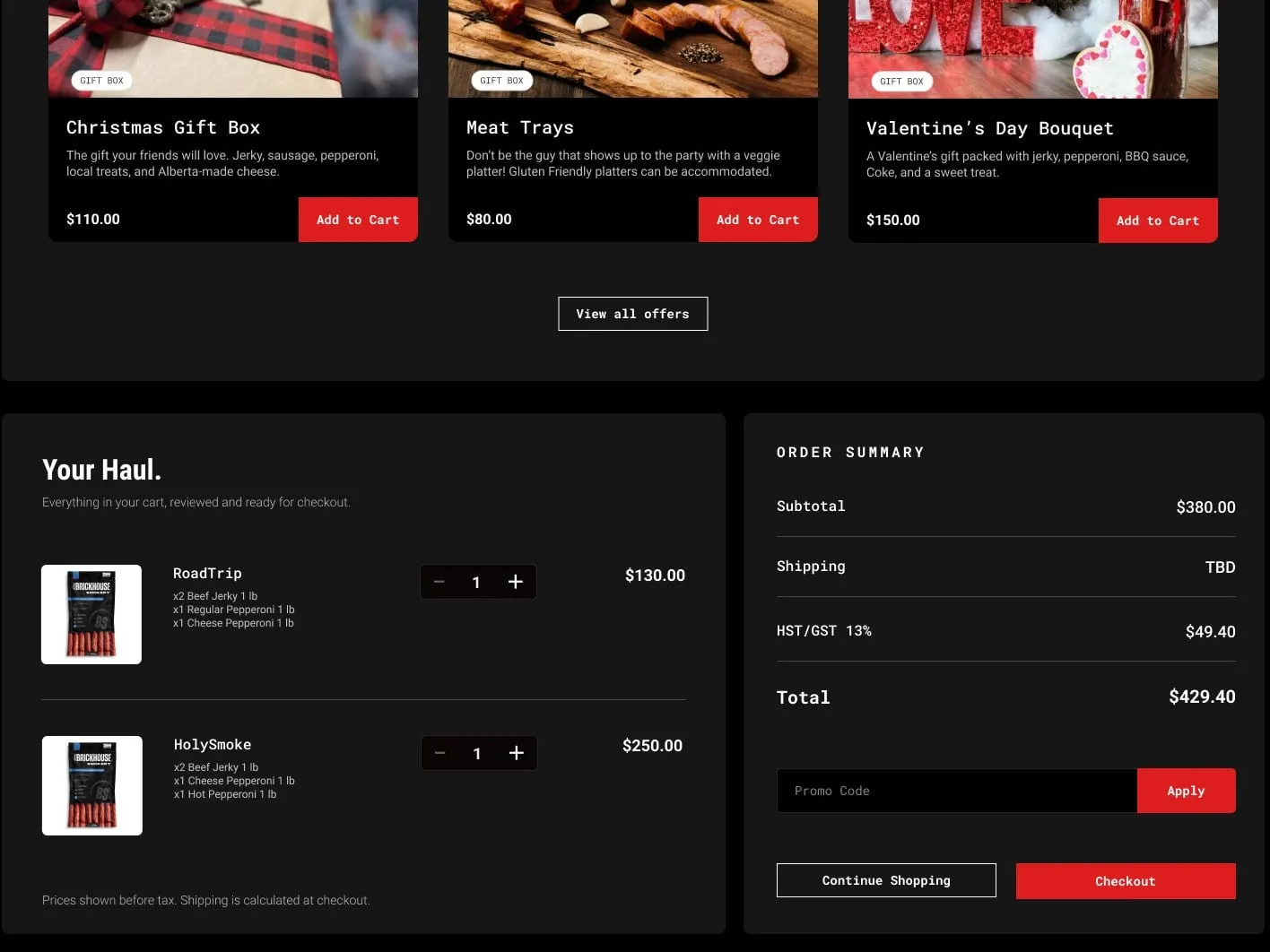
Home, collection, product, cart and checkout pages are designed around your products, not a generic template. Product photos get room to breathe, details are easy to scan and the path from browsing to buying stays short.
Checkout gets extra attention, because that’s where online stores win or lose the sale. You’ll see the designs on desktop and mobile before anything is built, and once they’re approved, we move into development and store setup.
-
03Build
Development & Setup
We build the store, set up products and connect payments, shipping and email. Categories, variations, shipping rules and order notifications are configured so the shop runs properly from the very first sale.
Behind the scenes, we make sure the pieces talk to each other, so orders, payments and confirmation emails all land where they should. You end up with a working e-commerce site, ready for our favourite part of testing: shopping.
-
04Test
Test Orders
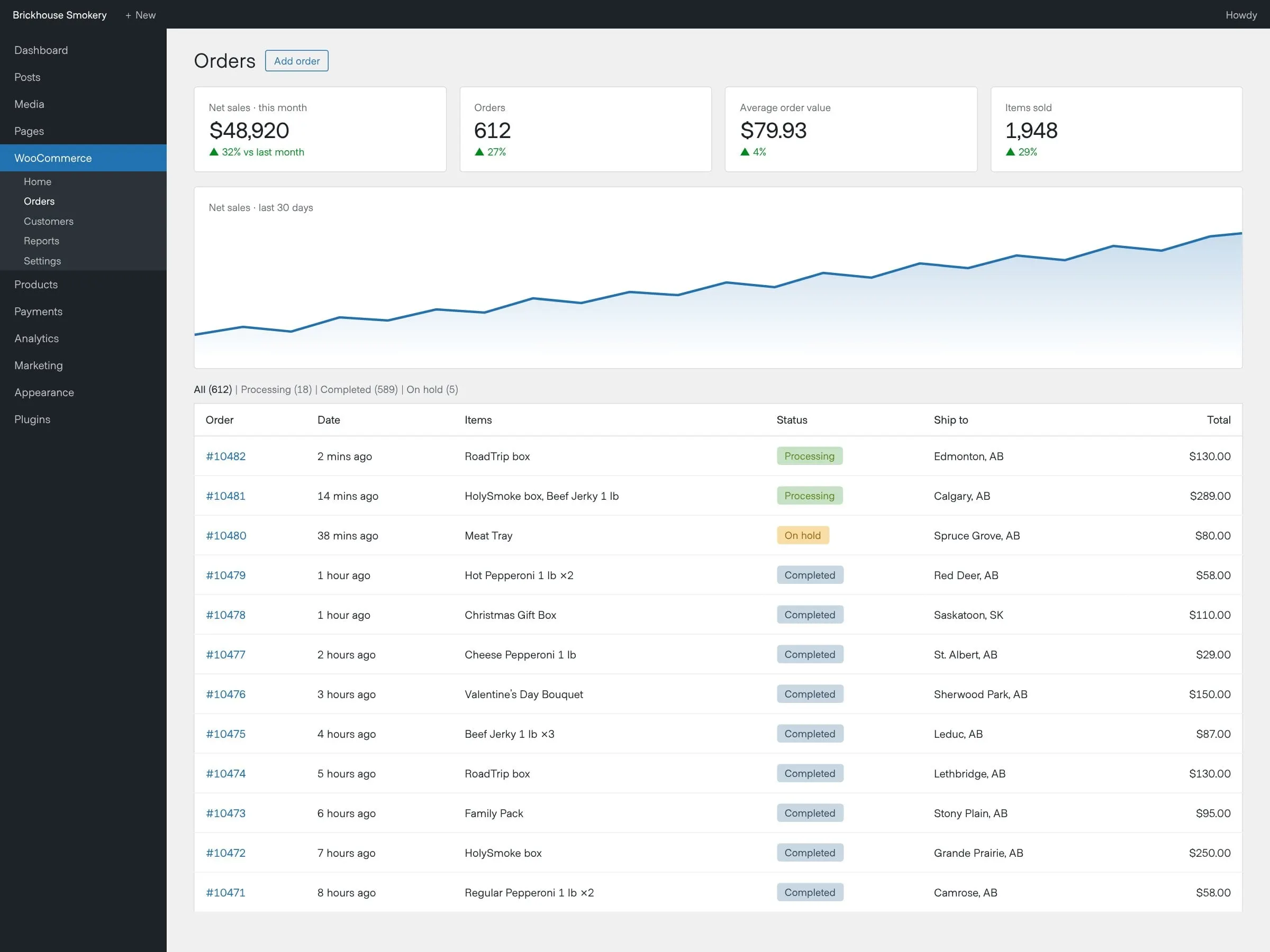
We place real test orders on every device before launch. Product pages, add to cart, discount codes, shipping rates, payment processing and confirmation emails all get a proper workout, following the same path your customers will take.
Think of it as the soft opening for your online store. Anything awkward or broken gets fixed before a real shopper runs into it. When the test orders go through cleanly from start to finish, we’re ready to open the doors.
-
05Launch
Launch & Grow
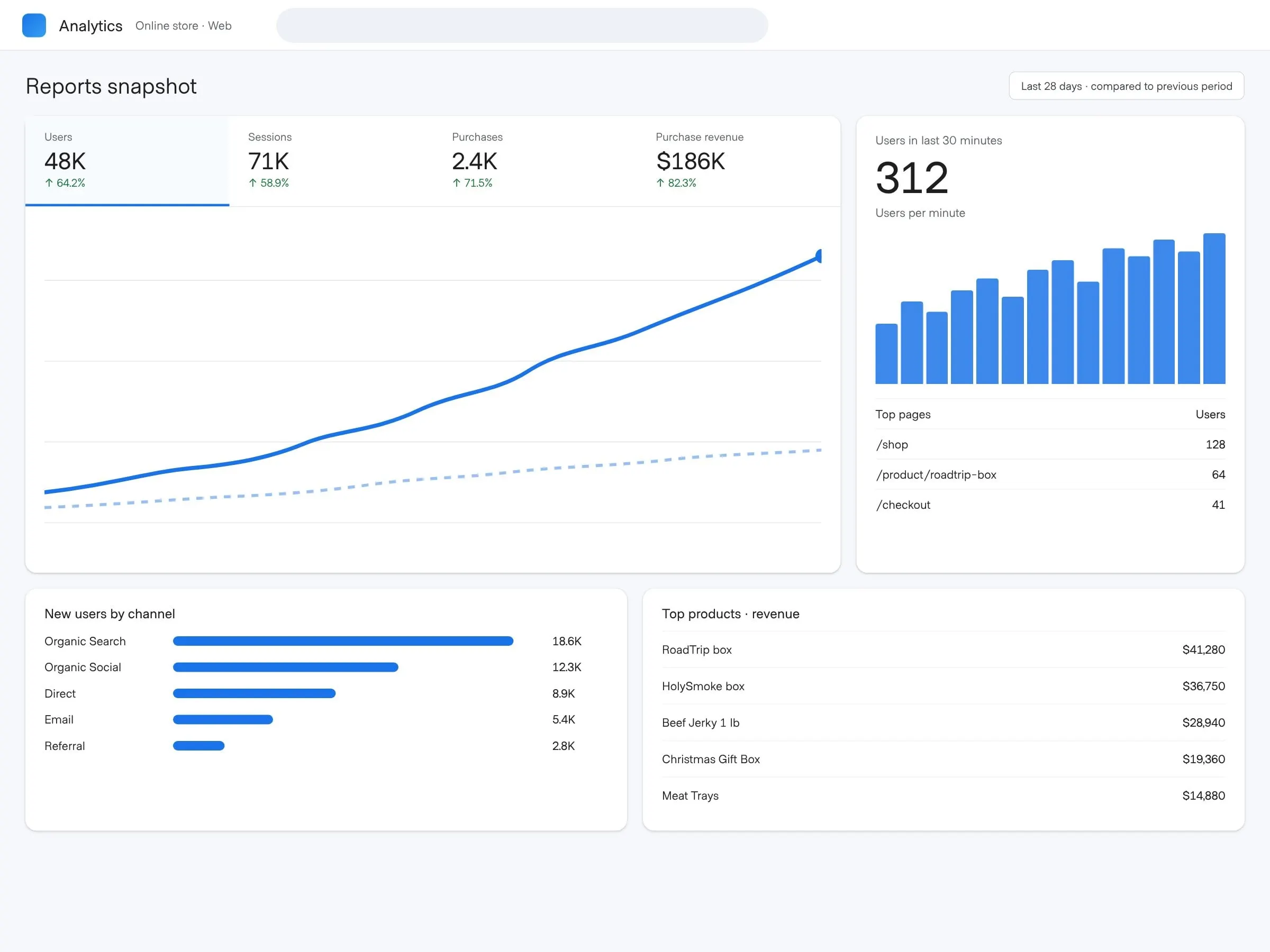
We launch your store, monitor sales closely in the early days and sort out anything that pops up. Launch is when real shoppers start teaching you things no amount of planning could.
From there, we help you improve what’s working: sharpening product pages, smoothing out checkout and finding ways to turn more visitors into customers. A good e-commerce website keeps getting better, and we’re happy to keep building on it with you long after that first order.
Why brands trust us with their store.
We understand products because we design them: the packaging, the branding and the store that sells them. That means your online shop tells the same story as the box in someone’s hands, and the whole experience feels like one brand from the first click to the delivery.
Brand and store in one
Packaging, branding and e-commerce are designed to work together. Your product looks the same on the shelf, in the box and on screen, which builds recognition and makes buying again easier.
Built to convert
Product pages and checkouts are designed to remove friction. Clear photos, honest details, visible shipping costs and a short checkout give shoppers fewer reasons to abandon their cart.
Easy to run
A dashboard your team can actually use. Adding products, updating stock, running a sale and processing orders are all straightforward, so you spend your time on the business rather than the website.
Ready to scale
From a handful of products to thousands. Collections, filters and search are planned to grow with your catalogue, so adding new lines never means rebuilding the store.
We’ve earned some good company. Recognize anyone?










What stood out most was Envy Design’s true design-first approach. They place equal importance on cohesion, visual storytelling, and brand integrity.

Beyond their technical expertise, what truly stood out was how personally invested the team was in our success. They took the time to understand our business priorities and consistently aligned their work to meet those objectives.

We had an incredibly short and aggressive timeline that Envy Design Co. met, delivering an incredible website. After the websites were launched, leads continued to come in.

Ready to build something worth envying?
Tell us a bit about your goals and we’ll be in touch as soon as we’re able to explore how we can help bring your vision to life.
Frequently asked questions.
Which e-commerce platform do you use?
We recommend the platform that fits your products and team, most often WooCommerce on WordPress or Shopify. We'll walk through the trade-offs during discovery.
WooCommerce is a great fit when you want full control, deep customization and your store tightly connected to a content-rich WordPress website. Shopify suits businesses that want a hosted platform with less technical upkeep and a large app ecosystem. Factors like your number of products, variations, integrations, shipping rules and who manages the store day to day all shape the right choice for your e-commerce website design. We don't push one platform for every client; we recommend what will work best for your business now and as it grows.
Can you connect the store to our inventory or ERP system?
Yes. We have integrated websites with ERP systems like SYSPRO, as well as accounting, shipping and email marketing tools.
Connecting your e-commerce website to inventory or ERP means stock levels, product details, pricing and orders can stay in sync without manual copying. That saves your team time and reduces the risk of selling something you don't have. Every system is different, so we start by looking at what yours supports and how information needs to flow, then recommend the most reliable approach. Some integrations are simple; others need custom development, and we'll be clear about that in your quote before work begins.
Will I be able to add products myself?
Yes. We set up your store so your team can add products, update stock, run promotions and manage orders without help.
Whether your online store runs on WooCommerce or Shopify, we organize it around how your team actually works, with sensible categories, product attributes and variations that make adding new items quick. Before launch we train your team on the everyday tasks: adding products, editing prices, creating discount codes and processing orders. We also make sure product pages stay consistent and on-brand no matter who's updating them. If you'd rather hand some of that work off, our maintenance plans include time for updates and changes.
Can you design our packaging and product photography direction too?
Yes. We design packaging and can direct photography so your products look consistent from shelf to screen.
For product brands, your e-commerce website, packaging and product photos all work together. When they share the same look and feel, customers recognize you instantly, whether they're scrolling online or standing in a store. We can design your packaging, create a photography direction that covers angles, lighting, backgrounds and lifestyle shots, and then design your online store to showcase it all. Consistent product photography also makes category pages look tidy and professional, which helps shoppers browse with confidence.
How much does an e-commerce website cost?
Custom websites at Envy start at $15,000. E-commerce projects vary with the number of products, integrations and custom features, and every project is quoted individually.
An e-commerce website's cost depends on things like how many products and variations you sell, whether you need ERP, inventory or accounting integrations, shipping and tax rules, subscriptions or wholesale pricing, and how much product content needs migrating or writing. Platform choice plays a role too. We'll talk through your goals and how you sell today, then send a clear, itemized quote so you know exactly what's included before committing.
Related
Better together
Pair your store with packaging design, email design and social media design. For food brands, see our work in food and beverage. Before you start, read the real cost of a cheap website.
Resources & articles
View all articles