Insights · Trades & HVAC
HVAC Trust Signals: What to Add to Your Website to Win More Jobs
In the competitive Canadian HVAC industry, homeowners are increasingly discerning. They don’t just choose a company based on price—they want to know they’re hiring a team that is credible, skilled, and reliable. Even with a visually appealing website and compelling messaging, the absence of trust signals can prevent visitors from converting into calls, quote requests, or booked services.
High-performing HVAC websites strategically use trust-building elements to reassure visitors, reduce perceived risk, and position your business as a dependable authority in heating, ventilation, and air conditioning services. When trust signals are visible, visitors are more likely to take action, engage with your services, and ultimately choose your company over competitors.
This article provides an in-depth look at the most effective trust signals for HVAC websites, with detailed examples, practical advice, and actionable steps to implement them.
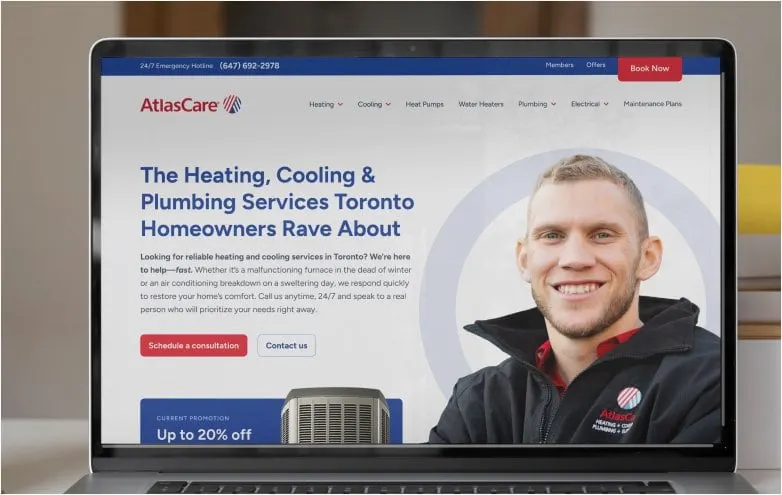
Reviews: Leverage Real Customer Feedback
Customer reviews are among the most influential trust signals for homeowners. They provide social proof that your company delivers quality service, meets expectations, and handles projects professionally.
- Prominent placement: Reviews should appear on your homepage, service pages, and near contact forms or booking buttons. This ensures potential customers see authentic feedback at key conversion points.
- Include details: Use customer names, locations, and specifics about the services completed. For example, “John D. from Mississauga had his furnace replaced within 24 hours and saved 15% on energy bills.” Such specifics increase credibility.
- Visual testimonials: Video reviews or photo testimonials are even more persuasive than text. Homeowners can see real people sharing authentic experiences, which builds confidence.
- Highlight results: Focus on outcomes that homeowners care about, like energy efficiency, comfort, timeliness, or professionalism. This shifts the narrative from generic praise to tangible benefits.
Properly implemented reviews reassure potential clients that your company consistently delivers results and reduces hesitation at the moment of booking or requesting a quote.
Badges, Certifications & Licences
Professional credentials signal competence, accountability, and professionalism. In Canada, this can include provincial HVAC licences, industry certifications, trade association memberships, and manufacturer approvals.
- Display strategically: Place badges near calls-to-action, on service pages, or in footers to reinforce credibility when visitors are most likely to convert.
- Explain the value: Don’t just show a badge—briefly explain what it represents. For example, “Certified by the Heating, Refrigeration and Air Conditioning Institute of Canada (HRAI) ensures adherence to industry safety and efficiency standards.”
- Visual design matters: Ensure badges are high-quality, consistent with your website branding, and clearly visible without overwhelming the page.
Trust signals like certifications and licences differentiate your HVAC company from competitors who do not showcase their qualifications, increasing homeowner confidence and likelihood of conversion.
Before-and-After Photos
Visual proof is one of the most persuasive trust-building tools for HVAC websites. Before-and-after photos demonstrate the quality, professionalism, and tangible results of your work.
Show real projects
For example, before-and-after images of a furnace replacement, ductwork upgrade, or air conditioning installation show the transformation and highlight your expertise.
Provide context
Include project descriptions detailing the challenges, solutions, and benefits. For instance, “Replaced an outdated HVAC system in a Toronto home, improving energy efficiency by 20%.”
Professional photography
Crisp, well-lit photos convey attention to detail and professionalism, reinforcing trust.
Strategic placement
Include these images near service pages, testimonials, or booking forms to combine proof with action triggers.
By visually demonstrating results, homeowners can better imagine the benefits of your service, which increases engagement and conversions.
Warranties & Guarantees
Offering warranties or service guarantees shows homeowners that your company stands behind its work, reducing perceived risk. This is a critical trust signal in the HVAC industry, particularly for costly installations or repairs.
- Be specific and transparent: Clearly outline coverage periods and what is included, e.g., “5-year parts and labour warranty on all furnace installations.”
- Highlight at decision points: Place warranty information near CTAs, forms, and service details to reassure visitors right when they are considering booking.
- Combine with proof: Pair guarantees with customer reviews, before-and-after photos, or certifications to further reinforce reliability.
Warranties reduce hesitation, helping homeowners feel secure in their decision and more likely to take immediate action.
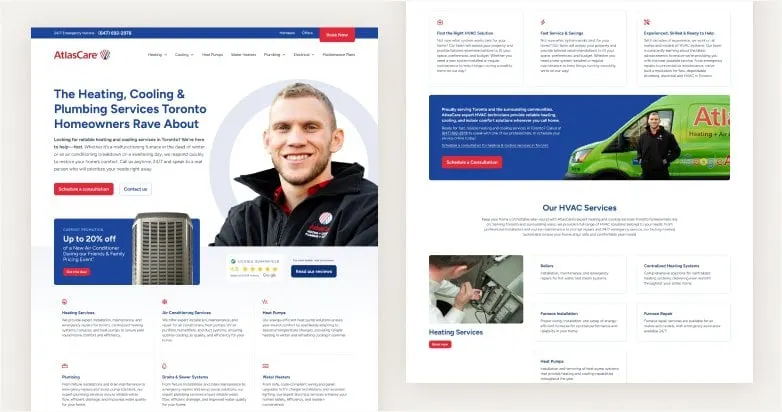
Staff Photos & Bios
Showing the people behind your company humanises your brand and builds trust. Staff photos and detailed biographies give visitors insight into the expertise, professionalism, and approachability of your team.
- Highlight qualifications and experience: Include certifications, years of service, and areas of expertise. This reassures homeowners that their HVAC needs are in capable hands.
- Use professional, approachable images: Show staff in uniforms, on-site, or performing work to convey both competence and friendliness.
- Local relevance: Mention which regions or cities each staff member serves to strengthen your local presence.
This transparency demonstrates accountability, making homeowners more comfortable reaching out and scheduling services.
Answer Common Homeowner Questions
A well-crafted FAQ section addresses common homeowner concerns, establishes authority, and reduces friction in the decision-making process.
- Answer relevant questions: Cover topics like maintenance schedules, energy efficiency tips, warranty coverage, emergency service response, and equipment upgrades.
- Organise logically: Group questions by service type or concern for easy navigation. For example, separate HVAC installation questions from maintenance or repair inquiries.
- Include CTA integration: Each answer can subtly guide visitors to book service or request a quote, such as “Learn more about our installation process or schedule your service today.”
FAQs build trust by demonstrating expertise and proactively addressing concerns, reducing barriers to conversion.
How Envy Design Builds Trust Into HVAC Websites
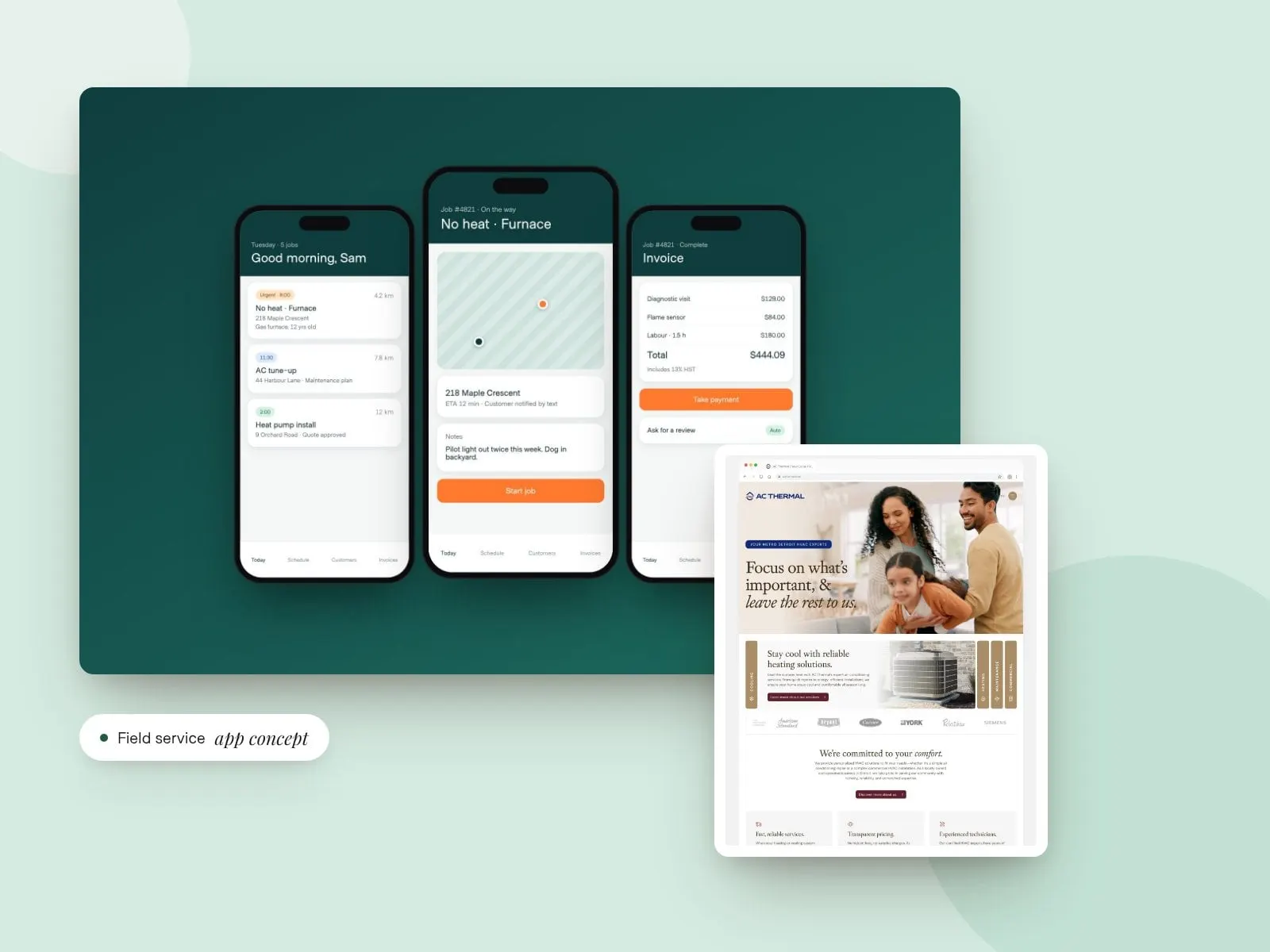
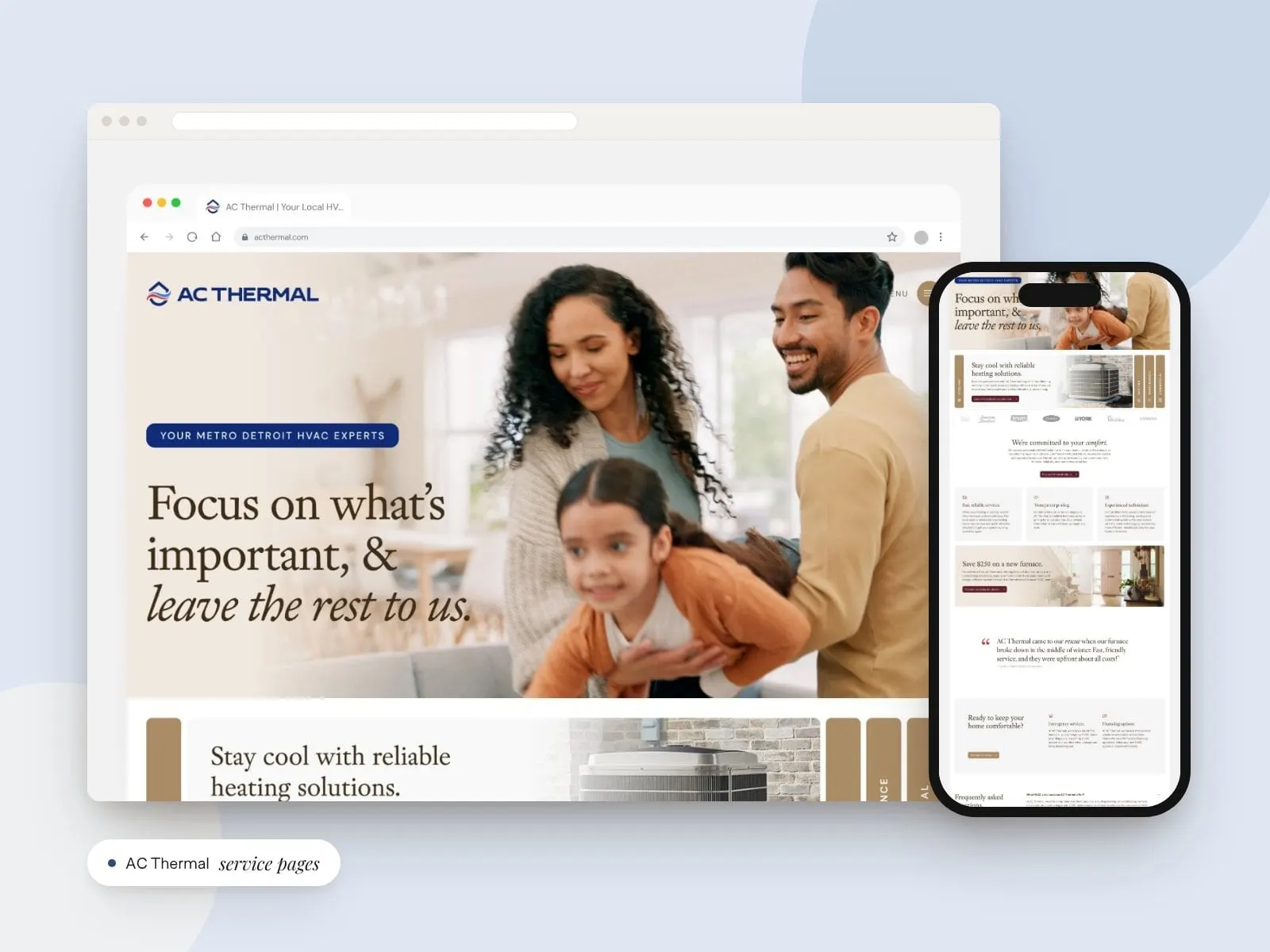
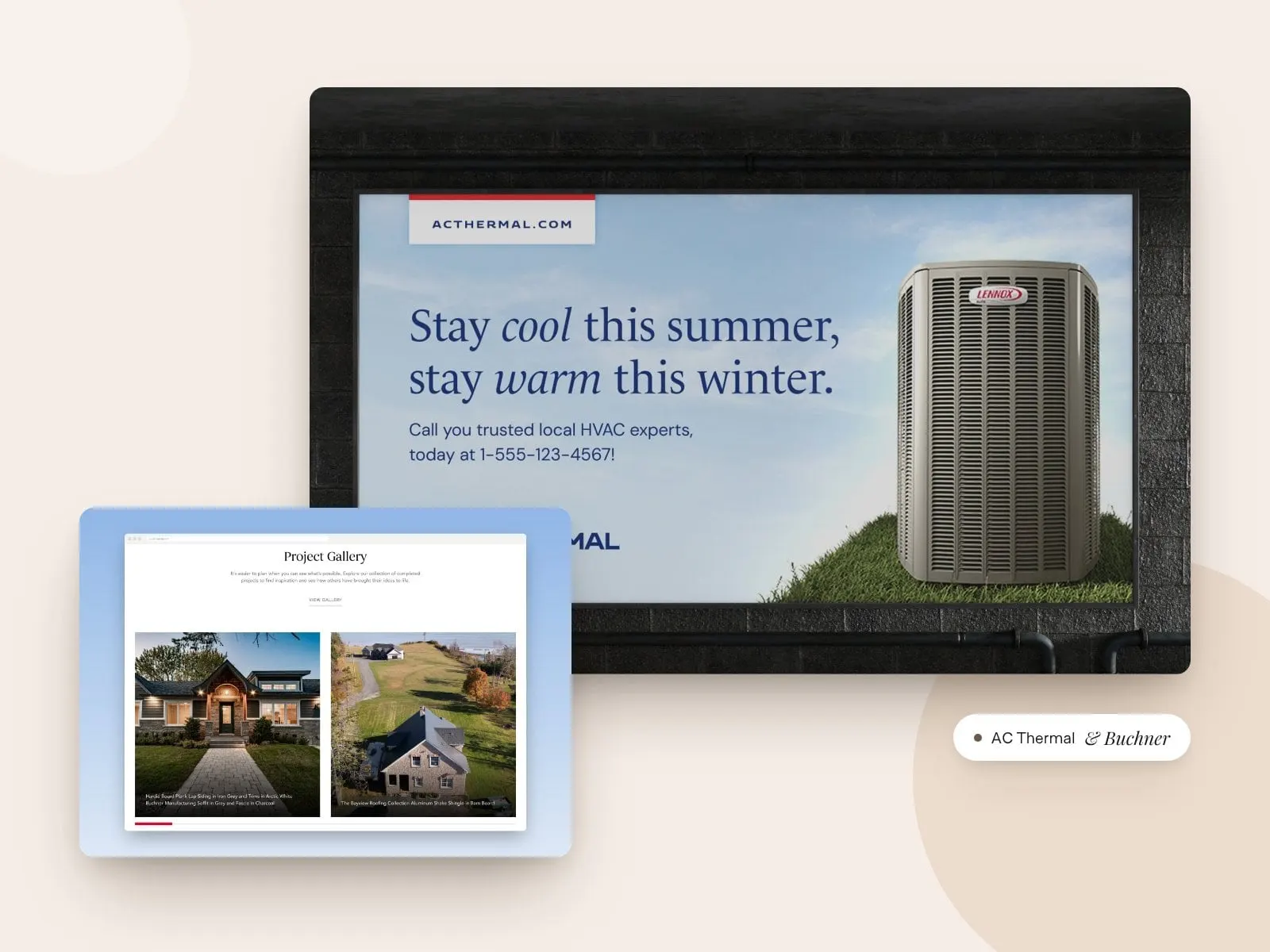
Trust isn’t accidental—it’s strategically integrated into every high-performing HVAC website. Envy Design, a specialized HVAC website design agency, ensures that your website includes all the credibility signals homeowners expect. For an example of our HVAC work, see the refined identity and fully custom website we built for AC Thermal, a locally owned HVAC company serving Metro Detroit.
We help HVAC companies:
- Display reviews, badges, and certifications strategically: Each element is placed to reinforce trust near critical CTAs.
- Include before-and-after galleries and staff bios: Visual proof and humanised content strengthen connections with visitors.
- Highlight warranties and guarantees: Clear messaging reduces perceived risk and encourages immediate action.
- Design FAQs and educational modules: Proactively answering homeowner questions builds confidence and authority.
- Optimise for Canadian homeowners: Local targeting, language, and context ensure trust signals resonate with your audience.
Our HVAC website design includes trust-building modules that guide visitors to explore how your business demonstrates credibility, reinforcing confidence and conversion.
With Envy Design, your HVAC website isn’t just visually appealing—it actively reassures visitors, builds trust, and converts traffic into leads and booked jobs.
Trust Signals Turn Visitors Into Customers
In the Canadian HVAC market, homeowners want assurance that the company they hire is reliable, professional, and accountable. Incorporating reviews, certifications, badges, before-and-after images, warranties, staff bios, and FAQs shows your business is credible, skilled, and trustworthy.
Partnering with a specialized HVAC website design agency like Envy Design ensures these trust signals are implemented strategically, optimized for conversions, and tailored to Canadian homeowner expectations. With the right combination of credibility elements, your website becomes a powerful tool to win more jobs, increase booked services, and grow your business.
Frequently asked questions
What are trust signals on an HVAC website?
Trust signals are elements that reassure homeowners you are credible, skilled and reliable. For HVAC companies the most effective are customer reviews, licences and certifications, before-and-after photos, warranties and guarantees, staff photos and bios, and a helpful FAQ section.
Inviting a stranger into your home to work on expensive equipment requires a fair bit of trust. Homeowners want evidence that you're qualified, that others have had good experiences and that you'll stand behind the work. Trust signals provide that evidence at a glance. The more genuine and specific they are, the better: real photos of your team, real reviews from local customers and clear explanations of your guarantees. We design HVAC websites to make that proof easy to find.
Where should trust signals go on an HVAC website?
Place them where homeowners make decisions: on the homepage and service pages, and near calls to action, contact forms and booking buttons. Seeing reviews, badges or warranty details at those moments reduces hesitation right before someone books or requests a quote.
Trust signals tucked away on an "About" page rarely get seen. They do their best work right beside the moment of commitment. A short review next to a quote form or a warranty note under a booking button can be the nudge someone needs. On mobile, keep them compact so they support the call to action without pushing it out of view. When designing HVAC websites, we plan trust signal placement as carefully as the buttons themselves.
Which credentials should an HVAC company show on its website?
In Canada this can include provincial HVAC licences, industry certifications such as HRAI, trade association memberships and manufacturer approvals. Don't just display the badge; briefly explain what it means for the homeowner.
Most homeowners won't know what an acronym stands for, so a logo on its own can fall flat. A short line explaining why the credential matters, such as the training or standards it represents, turns a badge into real reassurance. Make sure everything you display is current and accurate, and include credentials on relevant service pages, not just the homepage. We help HVAC companies present their qualifications clearly as part of their website design and branding.
Do warranties help HVAC websites convert?
Yes. Specific, transparent warranties such as a 5-year parts and labour guarantee show that you stand behind your work and reduce perceived risk, especially for costly installations. Highlight them near CTAs and pair them with reviews or certifications.
Vague promises like "satisfaction guaranteed" don't carry much weight. Clear terms, written in plain language, help homeowners understand exactly what's covered and feel more comfortable committing to a big purchase. Combining a warranty with reviews and credentials builds a stronger case than any one signal alone. Just make sure your website reflects the warranties you actually offer, and keep the wording consistent with your quotes and contracts so there are no surprises later.
Keep reading