Insights · Trades & HVAC
Why Your HVAC Website Isn’t Converting in Canada (And How to Fix It)
Many HVAC companies across Canada invest significant time and resources into digital marketing efforts—SEO campaigns, paid advertising, and local business listings—yet often their websites still fail to generate meaningful leads. If your site is attracting a decent amount of traffic but isn’t converting visitors into calls, form submissions, or scheduled services, the issue usually isn’t your marketing reach—it’s the design and strategy behind your HVAC website itself.
High-performing HVAC service pages in Canada require far more than simply having content on a page. They demand a cohesive strategy that incorporates effective search engine optimization, targeted local SEO for the regions you serve, and a user-centred design that aligns with actual homeowner behaviour. Working with a specialized HVAC Website Design Agency like Envy Design ensures your pages are not only visually appealing but are strategically constructed to reflect Canadian search patterns, homeowner expectations, and conversion-focused layouts, rather than generic templates or “one-size-fits-all” website solutions.
Your website is more than just an online brochure—it’s a 24/7 salesperson for your business. When the messaging, layout, and navigation aren’t optimized for conversions, even high-traffic websites struggle to turn visitors into paying customers. In the sections below, we’ll break down the most common reasons HVAC websites underperform in Canada, how these issues impact your business, and actionable steps to fix them effectively.
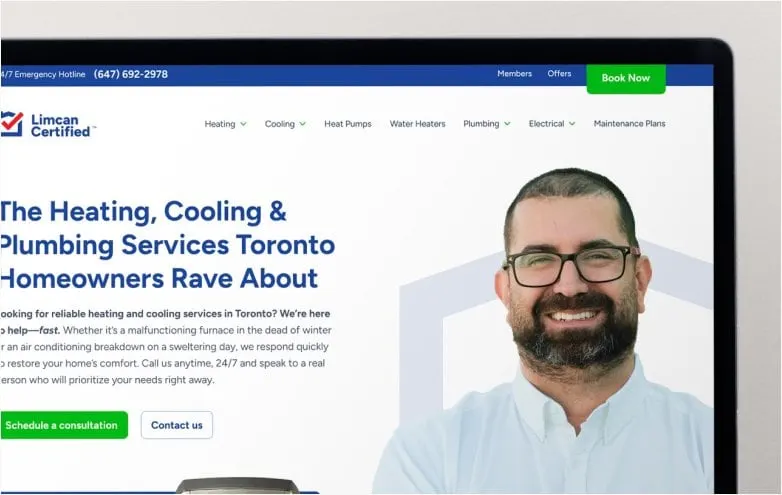
Common HVAC Website UX Mistakes
One of the most frequently overlooked reasons for low conversion rates on HVAC websites is poor user experience (UX). Many businesses focus primarily on aesthetics—professional-looking visuals, sleek layouts, and brand imagery—but fail to design their sites around guiding visitors through a clear path to conversion. In other words, a website may look great on the surface, but if it doesn’t provide an intuitive, user-friendly experience, it won’t generate leads.
Some of the most common UX mistakes include:
- Overcrowded homepages: Sites overloaded with images, sliders, banners, and dense text blocks often overwhelm visitors, making it difficult for them to find the key information they need. Important details about services, areas served, or contact options can get lost in the clutter.
- Confusing navigation: Menus that bury essential information—like service offerings, service areas, or pricing—force visitors to spend unnecessary time hunting for answers. Confusion leads to frustration, which often results in leaving the website altogether.
- Unfocused service pages: Many HVAC pages fail to answer the questions that homeowners have when considering HVAC work. They may describe features without clearly showing the benefits, leaving potential customers unsure why they should choose your company.
- No local signals: If visitors don’t immediately see which Canadian cities or regions you serve, they may assume your company doesn’t operate in their area, reducing trust and engagement.
Slow Load Times & Mobile Navigation Issues
With over 70% of searches for HVAC services now taking place on mobile devices, website speed and mobile usability have become non-negotiable factors for driving conversions. Homeowners searching for emergency HVAC services or seasonal maintenance are often pressed for time. If your website is slow to load or difficult to navigate on mobile, they won’t wait—they’ll move on to a competitor.
Some of the most common performance and mobile-related issues include:
- Heavy images and unoptimised media: Large, uncompressed images can slow load times by several seconds, which frustrates visitors and increases bounce rates. Even modern devices struggle with lag when sites aren’t optimized for performance.
- Bloated code and outdated plugins: Many HVAC websites are built on older platforms or incorporate unnecessary code and plugins, causing glitches, slow loading, and inconsistent behaviour across devices.
- Mobile navigation challenges: Menus that are hard to tap, small buttons, or service pages hidden behind multiple clicks create friction for users, reducing the likelihood they will contact you immediately.
Research shows that even a half-second delay in page load can reduce conversions by up to 20%, making performance optimization a critical component of any successful HVAC website.
Unclear CTAs & Weak Proof Signals
Even the most visually appealing website and high traffic won’t result in conversions if visitors aren’t sure what to do next or if they don’t feel confident in your services. Clear calls-to-action (CTAs) and credibility signals are crucial for turning website visitors into leads.
Common blockers to conversions include:
- Vague CTAs: Buttons labeled “Learn More” or “Submit” fail to create a sense of urgency or clearly explain the next step, leaving visitors unsure how to engage.
- Hidden contact information: Phone numbers or contact forms tucked away in footers or sidebars make it inconvenient for homeowners to reach you. Every extra step reduces conversion likelihood.
- Lack of proof: Missing customer reviews, industry certifications, or service guarantees weaken credibility and reduce trust in your business.
- Weak local relevance: If homeowners can’t see clear indicators that you operate in their city or region in Canada, they may move on to competitors who demonstrate local presence more effectively.
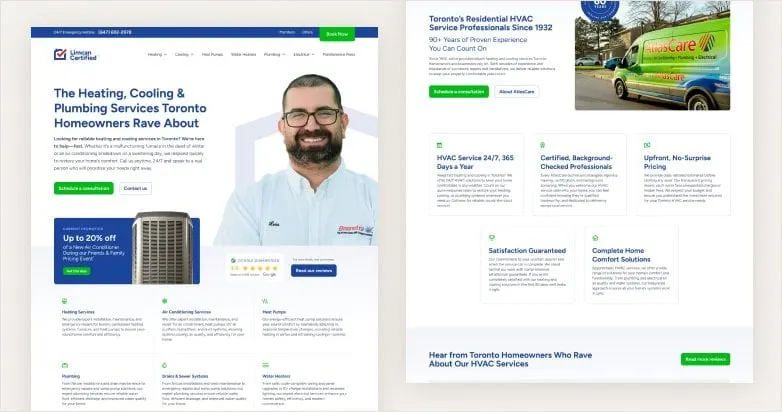
How Better HVAC Website Design Fixes Conversion Leaks
Effective HVAC website design goes beyond aesthetics. It creates a well-thought-out system that anticipates visitor behaviour, answers questions proactively, and removes friction along the path to contact.
Key improvements that address common conversion leaks include:
- Clear service pathways: Organising pages based on common homeowner needs makes it easy for visitors to find the information they are looking for without confusion.
- Prominent CTAs and phone numbers: Displaying calls-to-action and contact information at the right decision points encourages immediate engagement.
- Trust and proof placement: Featuring reviews, certifications, guarantees, and case studies reinforces credibility and helps homeowners feel confident choosing your company.
- Clean, uncluttered layouts: Reducing distractions allows users to focus on the most important actions, increasing the likelihood of conversion.
Turning HVAC Website Traffic Into Phone Calls
Ultimately, the goal of your HVAC website is to convert visitors into phone calls, form submissions, and booked service appointments. Websites that succeed in this area share several characteristics:
- Fast-loading pages on all devices: Users can access the information they need without delays or frustration.
- Prominently displayed contact info and CTAs: Visitors know exactly how to get in touch, making the decision to call simple and immediate.
- Clear explanations of benefits and differentiation: Homeowners understand why your company is the right choice, increasing the likelihood of conversion.
- Confidence-building proof elements: Reviews, case studies, testimonials, and service guarantees reassure users that they are making a smart choice.
How Envy Design Can Help HVAC Companies
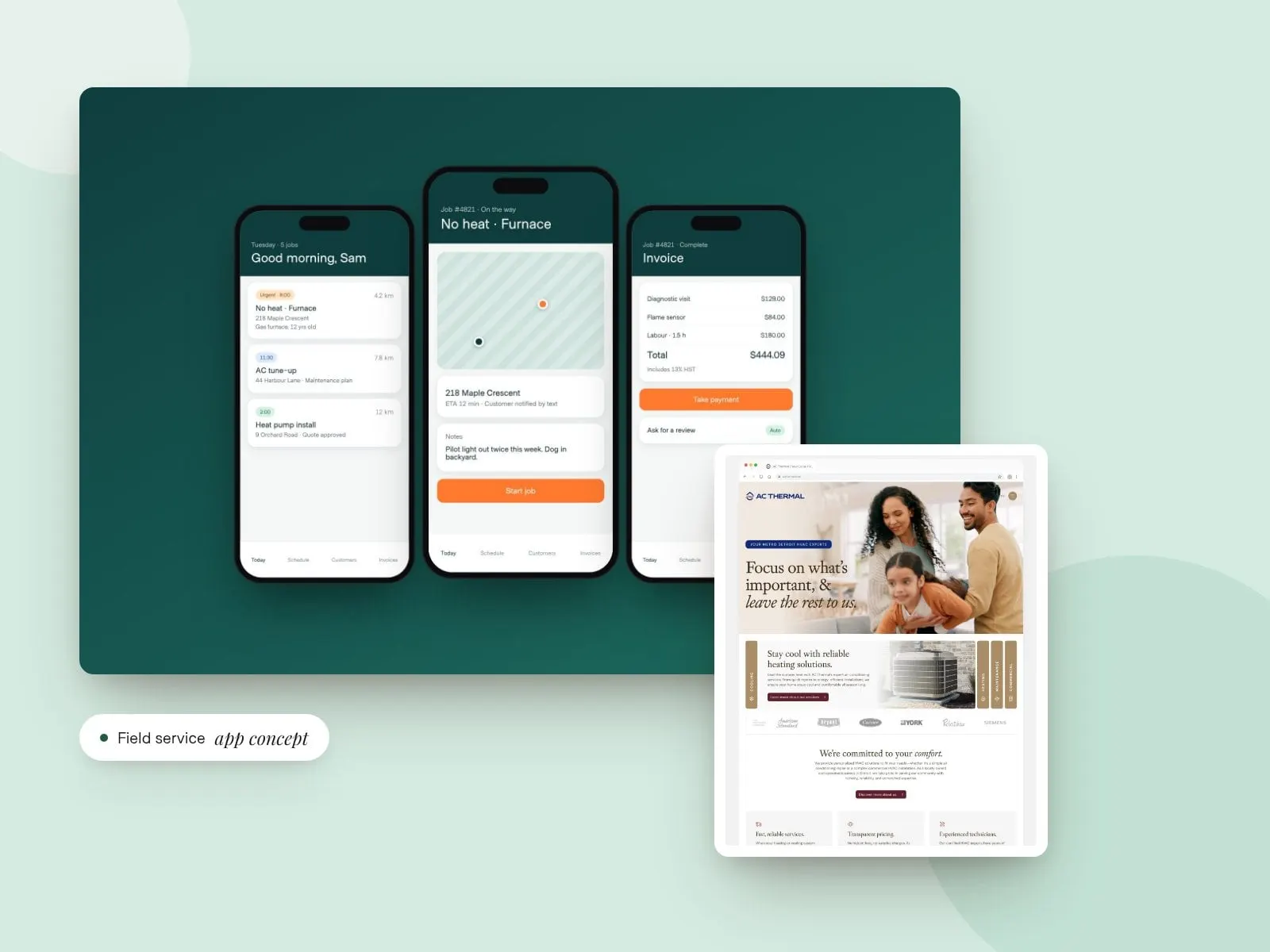
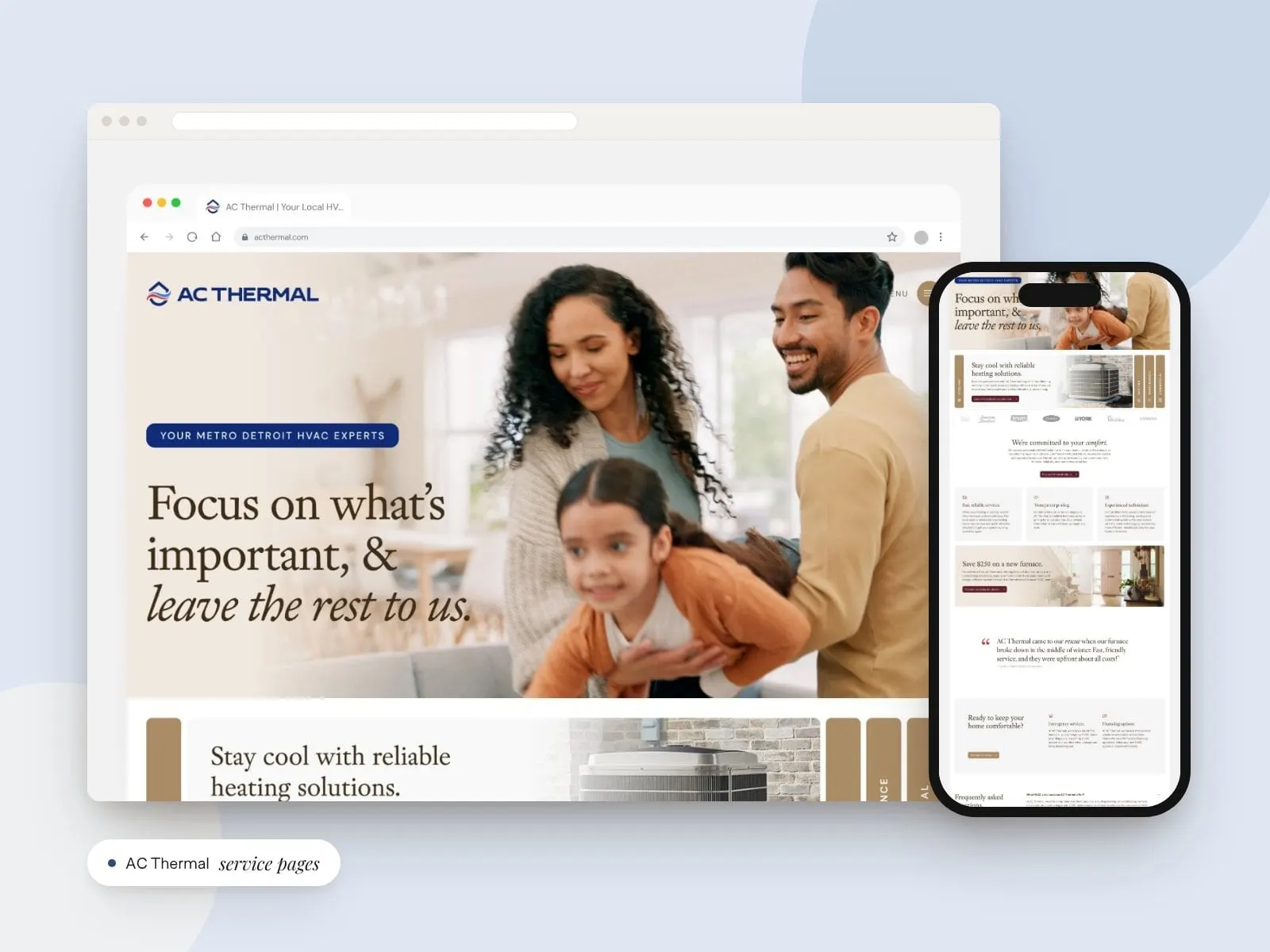
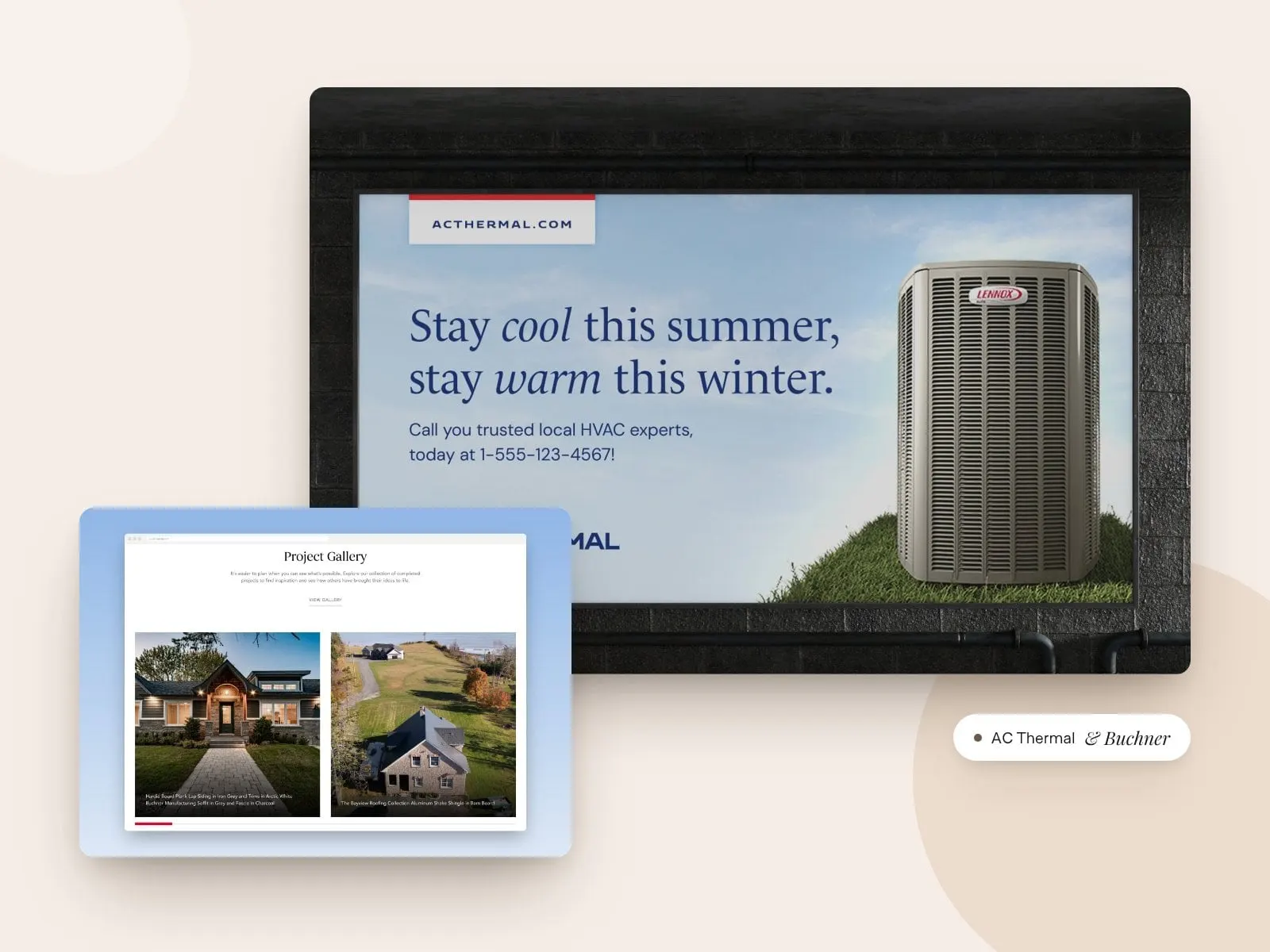
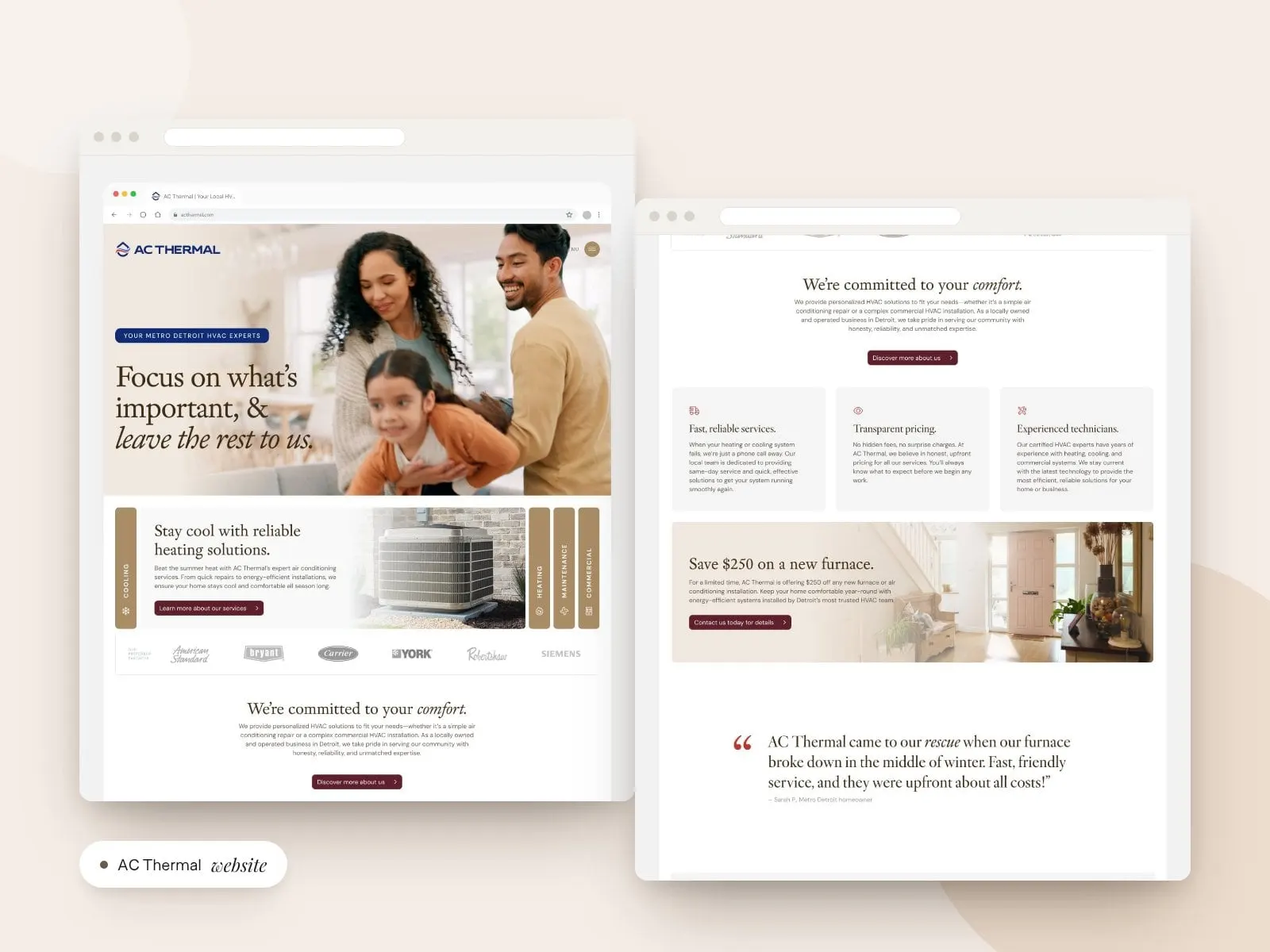
At Envy Design, we specialize in delivering HVAC Website Design solutions across Canada that are built for results, not just looks. Our work for AC Thermal, a locally owned HVAC company serving Metro Detroit, paired a refined identity with a fully custom website.
As a dedicated HVAC Website Design Agency, we understand:
- How Canadian homeowners search for HVAC services and make decisions
- Which design elements increase phone calls and form submissions
- How to structure websites for local SEO and competitive advantage
High-performing HVAC service pages in Canada require more than content—they require a combination of strategy, local optimization, and design built around actual customer behaviour. Our approach ensures every page is crafted to convert visitors into leads, scale alongside your business, and generate measurable results.
Explore our HVAC Website Design Canada services to see how Envy Design builds pages that do more than attract traffic—they turn website visitors into loyal customers who pick up the phone and book services.
Frequently asked questions
Why is my HVAC website getting traffic but no leads?
When traffic is healthy but calls and form submissions are low, the problem is usually the website's design and strategy rather than your marketing reach. Common causes are poor UX, slow mobile performance, vague calls to action and weak proof signals.
In other words, people are finding you, but something on the site is stopping them from picking up the phone. Try visiting your website on a phone as if you had an urgent heating problem. How long does it take to load, find your number and understand what you offer? That simple test often reveals the biggest issues. We help Canadian HVAC companies diagnose and fix conversion problems, whether through targeted improvements or a full redesign.
What UX mistakes stop HVAC websites from converting?
The most common are overcrowded homepages, confusing navigation, service pages that don't answer homeowners' questions, and no clear signals about which cities or regions you serve.
Homeowners looking for HVAC help want quick answers: can you fix my problem, do you work in my area and how do I reach you? An overcrowded homepage buries those answers, and confusing menus make people hunt for them. Service pages should explain each job clearly and address common concerns, and your service areas should be easy to spot. Fixing these UX issues often makes an HVAC website feel simpler and more trustworthy, which is exactly what stressed homeowners need.
How much does page speed affect HVAC website conversions?
A lot. Most HVAC searches happen on mobile, often in urgent situations, and research shows even a half-second delay can reduce conversions by up to 20%. Heavy images, bloated code and outdated plugins are frequent culprits.
When someone's furnace has stopped in a Canadian winter, they're not inclined to wait for a slow page. They'll head back to search results and call the next company. Improving speed often starts with compressing images, removing unused plugins and choosing quality hosting. If your site is built on a heavy or outdated theme, a rebuild may be more effective. We build HVAC websites with mobile performance as a priority from the very start.
What makes a good call to action on an HVAC website?
A good CTA states the next step clearly instead of "Learn More" or "Submit," and sits at key decision points alongside a visible phone number. Pair it with reviews, certifications and guarantees so visitors feel confident acting.
Wording like "Book Your Furnace Repair" or "Get a Free Estimate" tells homeowners exactly what they're signing up for. On mobile, make the phone number tap-to-call and keep a call button easy to reach. Place CTAs at the top of each page and after key sections, so visitors don't have to scroll back to act. Matching each CTA to the specific service page also helps. Clear, confident CTAs are one of the simplest ways to improve an HVAC website's conversions.
Keep reading